


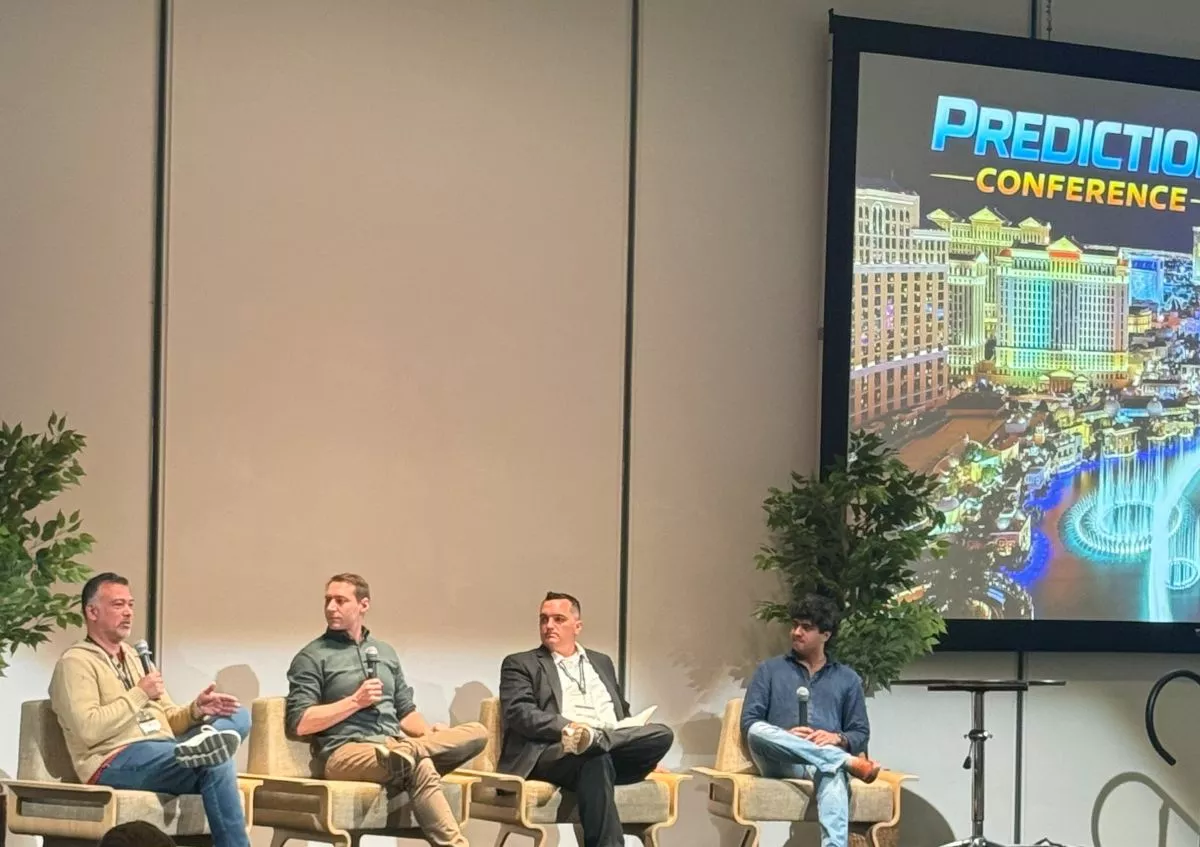
As I sit here at Harry Reid International Airport, going over my notes from the Prediction Markets Conference, a lot is running through my head. The past two days were packed with conversations, quick takeaways between sessions, and a handful of moments where things just started to make more sense.
There is going to be a lot more coming from this trip. I connected with a ton of people across the space, and we have interviews and deeper pieces lined up that deserve their own spotlight. For now, I want to walk through what stood out most while it is still fresh.
The Energy in the Room Was Noticeably Different
From the moment things got going at MEET Las Vegas, this did not feel like a typical industry event. There was less posturing and more honesty. People were willing to talk about what is not working just as much as what is. Many conversations circled back to the same core issues.
How do you make these platforms easier to use? How do you improve liquidity? How do you actually get people to stick around once they try it? Those are not flashy topics, though they are the ones that decide whether this space grows or stalls. That shift in focus made the whole conference feel more grounded than what we have seen before.
Delphi Markets Is Thinking About the Bigger Picture
Delphi Markets was one of the teams I kept coming back to after the event. It is a young group, but honestly, a brilliant one, and the way they are approaching data across prediction markets feels like something that could have a real impact. The idea of aggregating information from different platforms, including the giants like Kalshi, Polymarket, and also smaller platforms, and turning it into something people can actually use sounds very challenging.
In reality, it seems they have hit the market providing incredible data for users. As they grow and gain more users and partners, it will change how traders, casual users, and even larger firms approach decision-making. This feels like one of those projects that could quietly become essential if it develops the way they expect.
SafeBets Might Change How People First Enter the Space
SafeBets was another concept that came up in multiple conversations. The idea is simple, though the implications are pretty big. Give people a way to participate without the typical downsides while still earning rewards.
That kind of model removes one of the biggest barriers for new users. A lot of people are curious about prediction markets, though they hesitate to get involved. This creates a different entry point that feels easier to try. It is early, though it has the feel of something that could scale quickly if it catches on.
PredictIt Still Holds Its Ground
Hearing from John Phillips and thinking about PredictIt in the context of everything else happening was a good reminder of how important experience is in this space. He has been through the regulatory battles, challenged the system, and helped define what prediction markets look like in the United States today.
That perspective carries weight, especially as newer platforms try to grow and deal with similar challenges. There is a tendency to focus on what is new, though the groundwork laid by platforms like PredictIt continues to shape what is happening now.
FutureSearch Is Pushing the Information Side Forward
Dan Schwarz and FutureSearch.ai stood out for how clearly they connect to where things are heading. The focus is on making information easier to find, understand, and act on in real time.
That matters more than anything else when you think about how these markets function. Better information leads to better decisions. Tools that can surface that information quickly will become more valuable as competition increases. This feels like one of those ideas that could go from niche to necessary pretty fast.
EDGE Markets Is Focused on What Slows Users Down
Seni Thomas and the EDGE Markets team took a very direct approach. Instead of talking about what could happen, they focused on what is currently getting in the way. Moving funds, onboarding, and general usability are still pain points.
Their wallet system is built to make those processes smoother, which sounds simple but has a big impact on whether people stick with a platform. It is one of those areas where what may seem like small improvements actually are huge and can lead to major growth.
The Push to Bring More People Into the Space Is Real
One of the better parts of the conference was seeing the effort to expand the pool of participants in prediction markets. Agnes Rozite and Evelyn Parker are both working to bring more women into the space, not just as participants but as builders and leaders. That kind of growth matters. More perspectives lead to better markets and stronger overall engagement. It also makes the space feel more accessible, which is something it still needs.
Getting Users In the Door Is Still a Challenge
Joe Monaco’s session on customer acquisition made it clear that this is still a work in progress. You can build something great, though getting people to use it consistently is a challenge entirely different. There was a lot of discussion around targeting the right audience, keeping them engaged, and turning interest into action. The demand is there, though the execution on the growth side still needs to catch up.
Market Machines Could Show Up Sooner Than Expected
One of the more memorable conversations I had was with Jacob Kozhipatt from Market Machines. We ended up talking over dinner, and his idea stuck with me. The concept is to bring prediction markets into physical spaces via simple kiosks.
No apps, no complicated setup, just a quick interaction that anyone can understand. It is easy to picture this working in places like airports or convenience stores. Don't be surprised when you see a market machine at your local convenience store or gas station very soon.
Trade Handle Takes the Stage
Moderating the closing panel was a great way to end the event. Sitting with Shay Patel, Dan Reyes, and Dan Schwarz, the conversation covered where the space is going and what still needs to happen to get there. There was a clear sense that prediction markets are becoming more structured and more integrated into larger systems.
At the same time, nobody ignored the challenges. Regulation, usability, and infrastructure all came up as areas that still need work. That balance made the discussion feel real, not overly optimistic or overly critical.
What Comes Next From Trade Handle
This trip is going to lead to a lot more content. There are too many good conversations and insights to leave it at a single recap. We have interviews lined up, deeper dives in the works, and more stories coming out of the connections made over these three days.
Being there in person made a big difference in understanding how people are actually thinking. The goal now is to take everything gathered and turn it into something useful for you to follow along with.
The Trade Handle Analysis on the Prediction Markets Conference
This conference felt like a step forward for the space. The conversations were more focused, the ideas were more practical, and the people involved were clearly thinking about long-term growth. There is still a lot that needs to be solved. Making platforms easier to use, improving infrastructure, and figuring out the regulatory side are all ongoing challenges.
At the same time, it feels like the direction is starting to come into focus. The biggest takeaway is that prediction markets are moving beyond potential. They are becoming something more defined. What happens next will come down to how well these ideas turn into real products, though after spending two days around it, it is clear that progress is happening.