


Prediction markets have opened the door for millions of people to trade on everything from sports and politics to movies and music. If you can predict the future in some arena you’ll have success on prediction markets.
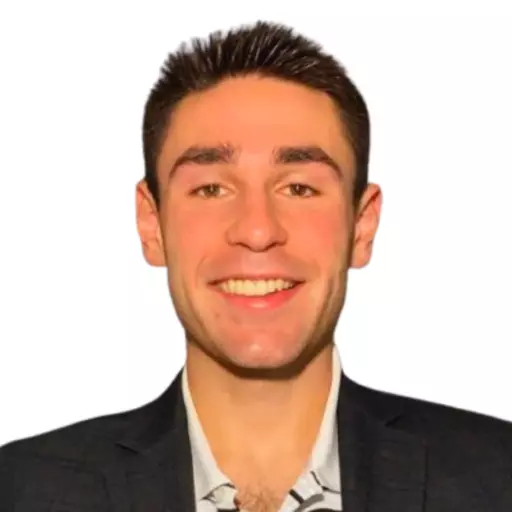
Despite this, casual traders will typically struggle and a Minnesota man is proving why. Caleb Davies, a veteran prediction market trader from Minnesota has been generating massive profits on prediction markets.
After years of developing statistical models and refining his process, he has reportedly generated more than $1 million trading event contracts, primarily on entertainment markets.
His story serves as a reminder that prediction markets are becoming increasingly sophisticated, and something that exchanges need to account for as they grow.
Data Always Wins
Prediction markets often look simple on the surface, which is why they have attracted casual players. Let’s look at entertainment markets for example. For most users, those markets come down to opinions, but experienced traders have an algorithm.
Successful prediction market participants are increasingly using historical databases, probability models, and automated tools to identify prices that don't accurately reflect the true odds.
Rather than predicting what they hope will happen, they're searching for contracts where the market has mispriced the outcome. That difference is what separates recreational traders from professionals.
Just because someone follows sports, movies, or politics doesn't necessarily mean they have an edge. In many cases, they're trading against people who have spent years building systems specifically designed to find value who don’t have any personal knowledge of the markets.
Sharp Money is Increasing
Prediction markets have exploded over the last two years and sharps as well as institutional investors are starting to get involved.
Kalshi and Polymarket have expanded well beyond election contracts and now offer markets covering sports, finance, entertainment, economic data, and dozens of current events. That rapid growth has also attracted a new class of experienced traders looking to capitalize on less efficient markets.
As liquidity increases, so does competition.
Many experienced traders describe the influx of new users as creating opportunity because inexperienced participants often make emotional decisions instead of probability based ones.
That doesn't mean every professional wins every trade, but they make money over time. Davies is a prime example of this as he has been able to generate millions.
Even the most successful traders experience losing streaks. The difference is that they consistently place wagers where they believe the long term expected value works in their favor.
Over hundreds or even thousands of trades, those small edges can become significant profits.
Are Retail Traders at a Disadvantage?
The rise of professional prediction market traders has fueled an ongoing debate.
Critics argue that everyday users may not fully understand who they're trading against. Unlike traditional sportsbooks where customers wager against the house, prediction markets often match participants against one another.
This is no different in a regular sportsbook.Beginners could unknowingly be taking positions against traders armed with advanced analytics, years of financial experience, and proprietary forecasting models.
Supporters counter that prediction markets function like financial exchanges, where informed participants help improve price discovery and create more accurate probabilities.
The Trade Handle Prediction Markets Take
The timing of this discussion is especially interesting as Minnesota prepares to become the first state to specifically outlaw many prediction markets. This means Davies could have a tough time making money in the state.
If more states attempt to regulate prediction markets differently than the federal government, the industry's rapid expansion could face its biggest challenge yet. Sharps would have to look elsewhere to make money.