


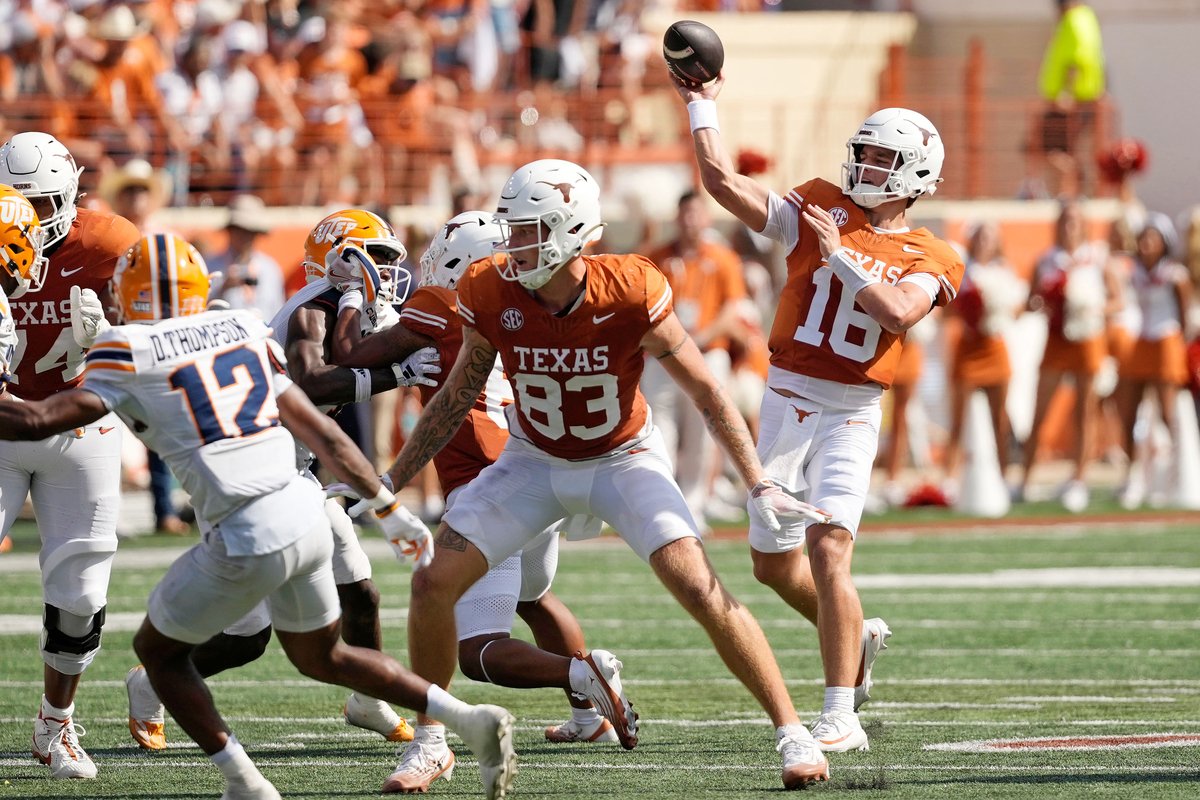
Football season is almost here, and I think prediction markets are about to have their biggest moment yet. The NFL regular season is around the corner, college football is getting ready to take over Saturdays, and prediction market platforms have spent the past year building deeper sports products, better liquidity, and much larger audiences. All of our coverage at Trade Handle has made one thing increasingly clear to me: football might be the sport that shows just how mainstream prediction markets can become.
There are legitimate questions surrounding regulation, market integrity, and consumer protection. Those shouldn't be brushed aside. Still, I believe the positives outweigh the concerns, particularly when you consider how prediction markets expand access, make pricing more transparent, and give informed football fans an entirely different way to trade what they know.
Millions of Football Fans Finally Have Another Option
The accessibility piece is impossible to ignore. As of 2026, traditional sports betting remains completely prohibited in 11 states: Alabama, Alaska, California, Georgia, Hawaii, Idaho, Minnesota, Oklahoma, South Carolina, Texas, and Utah. Residents in those states cannot legally use online or retail sportsbooks.
That leaves out some enormous football markets. California and Texas alone are packed with NFL and college football fans. At the same time, states such as Alabama, Georgia, Oklahoma, and South Carolina are home to some of the most passionate college football audiences anywhere in the country.
Prediction markets completely change the equation. Federally regulated event-contract exchanges have operated nationwide under the Commodity Futures Trading Commission's oversight, including in states without state-regulated sportsbooks. There are ongoing lawsuits and state-level challenges that could alter access in individual jurisdictions, so the legal picture isn't settled everywhere. Still, the broader federal model has opened sports trading to millions of people who previously had no comparable legal option.
That matters. These fans aren't placing a traditional wager against a house. They're buying and selling event contracts in a marketplace where prices move according to supply and demand. That distinction is fundamental to understanding why I think prediction markets fit football so naturally.
Football Feels Made for Trading
Football gives you exactly what a good prediction market needs: information, disagreement, constant developments, and enough time for people to form different views. Consider everything that changes between Monday morning and kickoff. Injury reports come out. Weather forecasts move. Coaches speak to reporters. Depth charts change. A quarterback's availability becomes clearer.
By Sunday afternoon, dozens of little pieces of information have changed how people view the game. A prediction market turns all of that into a live price. A contract trading around 60 cents roughly represents a 60% market-implied probability. If new information changes expectations, that price can move. You aren't necessarily locked into the position until the game ends either.
If the market moves in your favor, you can potentially sell beforehand. That creates a completely different experience from simply making a prediction and waiting. For the 2026 football season, fans can potentially follow markets involving:
- Individual game winners
- Conference and division champions
- Playoff qualification
- Super Bowl and national championship winners
- Player awards such as the Heisman Trophy
- Season-long team and player outcomes
- Various game and player performance contracts
Platforms including Kalshi, Polymarket, Robinhood, Crypto.com, and OG are approaching the category in slightly different ways, which is another positive. Competition should push everyone toward better pricing, better products, and better user experiences.
College Football Might Be Even More Interesting
I'm especially interested in what happens with college football. The NFL has only 32 teams and an enormous amount of standardized information. College football is chaos by comparison. There are more teams, more players, transfer portal movement, recruiting differences, coaching changes, uneven injury reporting, conference realignment, and huge differences in roster depth.
That creates information gaps. Someone who follows the Sun Belt closely may genuinely know things the broader market hasn't fully accounted for yet. The same could be true for an SEC fan who closely follows recruiting and depth charts, or for someone who spends the entire offseason tracking transfer portal movement.
Prediction markets reward that kind of knowledge because you aren't simply asking, "Who wins?" You're asking whether the current market price properly reflects what you know. That's a much more interesting question.
The Integrity Concerns are Real, but Manageable
This is where I don't think supporters of prediction markets should become defensive. The NCAA and professional leagues have legitimate reasons to care about integrity. Hyper-specific contracts involving individual actions, officiating decisions, or outcomes that a single participant could potentially control deserve additional attention.
Confidential injury information and other nonpublic information also create obvious issues. Those concerns don't convince me that sports prediction markets should disappear. They convince me that the industry needs good rules.
Strong identity verification, trading surveillance, restrictions on athletes and team personnel, position monitoring, clear resolution procedures, and cooperation between exchanges, regulators, and leagues can address many of these concerns. Transparency is better than pushing demand somewhere nobody can see it.
If people want to trade on sports outcomes, I would much rather see that activity happen on identifiable, monitored platforms with audit trails than migrate toward offshore or unregulated alternatives. Bringing activity into the open gives regulators and leagues more tools, not fewer.
Sportsbooks Should Be Paying Attention
I don't think prediction markets will eliminate traditional sportsbooks. I do think they're going to force them to become better. Casual fans may continue preferring the simplicity, promotions, and familiar interfaces they've used for years. Prediction markets appeal to a different type of customer too: someone who cares about price, wants the ability to enter and exit positions, dislikes being restricted for successful activity, or simply prefers an exchange model.
The competition is already changing the industry. DraftKings Predictions and FanDuel Predicts show that traditional operators recognize the opportunity. Robinhood bringing event contracts into a mainstream financial app takes the concept in an entirely different direction. Crypto.com and OG add another route into the market. That's healthy competition. Consumers usually win when established companies suddenly have to compete with a genuinely different model.
The Trade Handle Prediction Markets Take
I think the 2026 football season could be remembered as the point when prediction markets stopped feeling new. The World Cup showed that enormous trading volume in sports is possible. Football offers something even more valuable: months of games, weekly storylines, injuries, playoff races, awards, conference championships, and ultimately the College Football Playoff and Super Bowl.
More importantly, football gives prediction markets a chance to reach fans who have largely been excluded from state-regulated sportsbooks. Someone sitting in Texas or California can follow their football knowledge through a marketplace built around trading probabilities rather than simply being told that their state hasn't authorized traditional sportsbooks. There will be legal fights. There should be continued discussion around integrity and consumer protection.
Some products will probably need tighter guardrails than others. None of that changes my larger view. I think prediction markets make football more interesting. They reward information, create transparent probabilities, introduce real competition into the sports marketplace, and give millions of fans another way to engage with games they already obsess over. Five years from now, I wouldn't be surprised if football fans look back and wonder why buying and selling positions as a season unfolded ever seemed unusual in the first place.