

Federal officials have opened an investigation into mention markets offered by prediction markets, which allow users to predict words or phrases that will be said by a narrator, commentator, or speaker during a given event.
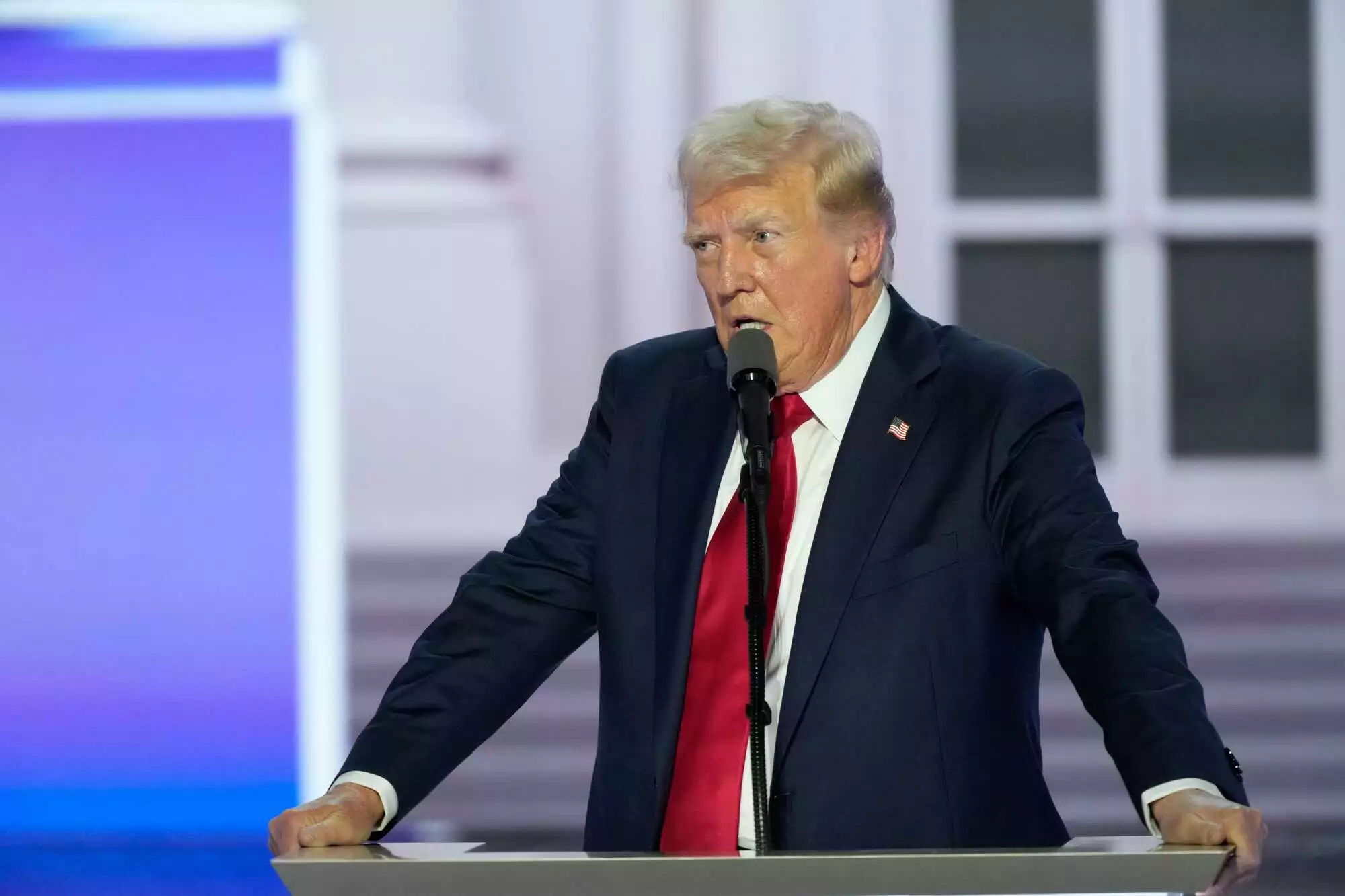
Mention markets can deal with individuals from NFL broadcasters to President Donald Trump, who was recently connected to a mention market scandal. NPR was the first to report the investigation.
Kalshi pulls the plug
News of the probe comes almost two months to the day since it was reported that Trump’s teleprompter operator won six figures using mention markets. Gabriel Perez, who had worked with the President since 2016, used his access to Trump’s speech material to trade positions related to certain key phrases, and would even sell contracts during live speeches if Trump skipped over a planned section.
Sports mention markets pay customers if announcers say key phrases from a provided list. That could include words such as “turnover,” “penalty,” “gunslinger,” and much more.
In response to the investigation, leading operator Kalshi removed all mention markets for sports events from its platform. Polymarket, its top competitor, has them available on its larger global platform, but not on its Polymarket US page.
An anonymous source referenced by NPR said that Kalshi’s sports mention markets were down “until further notice,” and they did not know if they would return.
Mention markets for events in other industries, such as Trump’s New York speech, Klarna’s earnings call, Brett Kavanaugh’s Notre Dame lecture, are still available.
Mention markets at prediction markets
Sports event contracts are the most popular product offerings at prediction markets. They produce more than 80% of the notional trading volume reported by licensed operators and are projected to experience a significant jolt with the NFL season ready to begin in less than a month.
Critically, the Commodity Futures Trading Commission (CFTC) — the federal body in charge of regulating prediction markets — is not narrowing the scope of its investigation to sports.
“These mention markets are not popular across the political aisle,” an anonymous source told NPR. “They are potentially very easy to manipulate, so the CFTC is taking a hard look at whether some of them make sense.”
One of the rules that operators must follow when they create new prediction markets is to certify that they cannot be easily manipulated. An NPR source and a former Kalshi employee said that the nature of mention markets makes them a prime target for nefarious interference, since their outcomes are usually controlled by one individual.
The former Kalshi employee asserted that Kalshi co-founder Luana Lopes Lara is heavily behind mention markets, specifically because of their ability to draw traders beyond the world of sports. Risking money on the speech of an actor during the next episode of a hit Netflix show or a political candidate’s message on the campaign trail gamifies “ordinary” aspects of daily life.
CFTC exercising regulatory power
The CFTC has largely given full-throated support to licensed prediction markets during their national surge into mainstream prominence.
That took a turn last week, when the Commission seemingly reprimanded operators by sending them a note that warned them about displaying American-style betting odds on their platforms. Doing so put them outside of their regulatory obligations and also contributed to a blurring of the lines between prediction markets and sports betting sites, which has been the source of a large number of legal disputes across the country.
A potential ban or restructuring of mention markets would mark another intervention from the CFTC, which has routinely claimed regulatory authority over prediction markets.
The Trade Handle Prediction Markets Take
There are many examples of manipulation and interference at prediction markets, including Trump’s teleprompter operator, a U.S. soldier who won more than $400,000 predicting the capture of former Venezuelan president Nicolás Maduro, and ex-Congressman George Santos allegedly predicting he wouldn’t attend the State of the Union after telling his X (Twitter) followers that he would. Prediction markets have picked up substantially in the wake of these scandals, so it’s not surprising that the CFTC wants to ban markets that could invite fraudulent manipulation.