


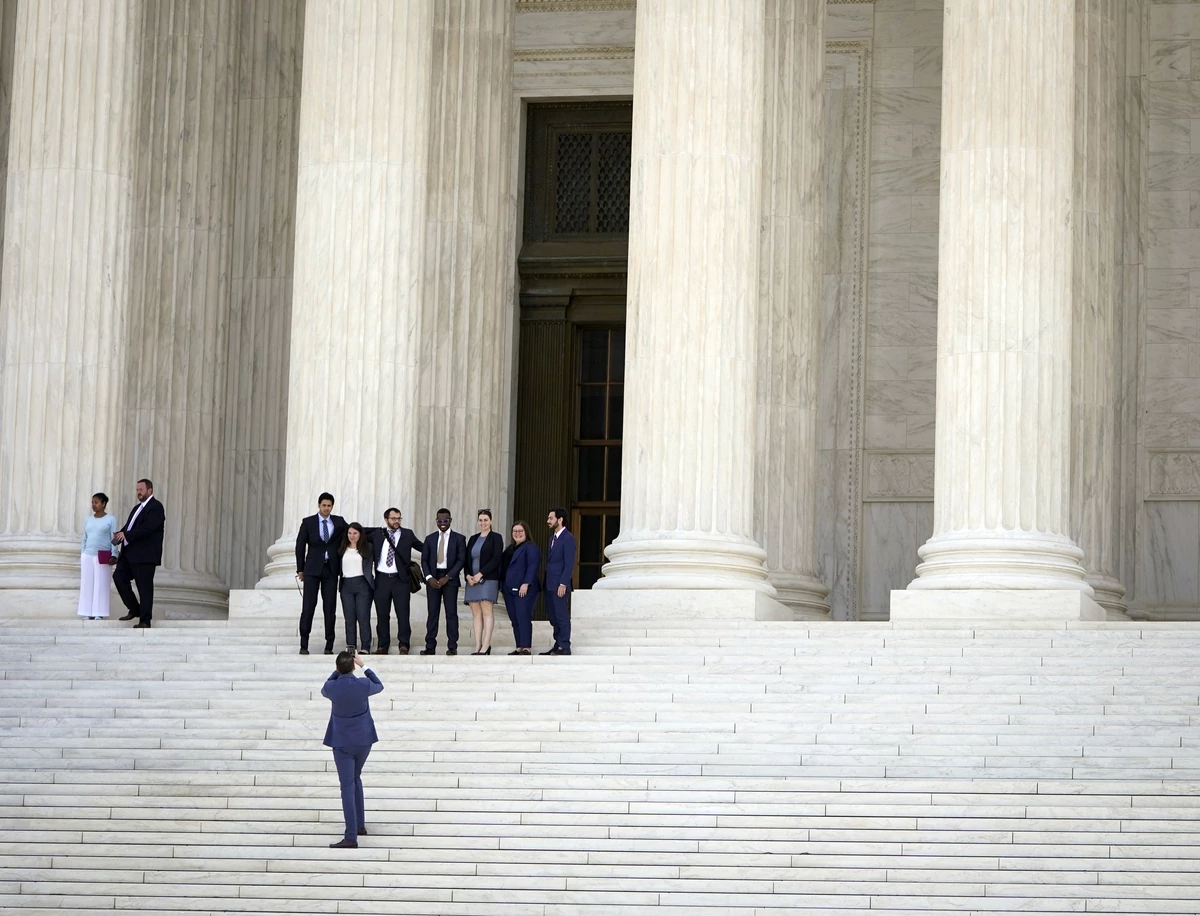
Prediction markets are jumping through non-stop legal and regulatory hoops lately. Flip Pidot, the chief strategy officer of PredictIt, revealed in a recent interview with Fortune that the escalating prediction market legal landscape could reach the United States Supreme Court by next June.
A recent CFTC meeting getting heated signals that not everyone is on the same page, either. Right now states and federally regulated prediction markets aren’t seeing eye to eye, while continued insider trading infractions only intensify lingering issues.
Why Prediction Markets Could Reach the Supreme Court
Stephen Piepgrass, a prediction market attorney, also suggested that the ongoing dispute could make Supreme Court intervention likely.
At the forefront of the discussion is the actual definition of what prediction markets are, and how the future structure of the U.S. prediction market industry should look.
The big question? Whether sports event contracts are legit financial products that should be traded, or if they are simply just sports wagers that individual states should have the power to regulate.
What’s at Stake for Prediction Market Platforms?
The complete eradication of prediction markets in any given state is unlikely, but not impossible. There is precedent for it in U.S. states already, as sports betting is legal on a federal level everywhere, but a handful of states have maintained the right to deny it within their borders.
State-by-state disruption or complete cancellation is one problem to consider, but the overarching issue is deciding who actually gets to regulate prediction markets in America.
If the prediction markets win this fight, a much cleaner path is established for CFTC-regulated markets to operate throughout the nation. This would allow prediction market platforms to operate within one national framework, rather than adhere to different sets of gambling laws (or acquire numerous licenses) across multiple states.
A loss would not necessarily be devastating, but at a bare minimum it would lead to a frustrating string of headaches. Prediction markets like Kalshi and Polymarket would potentially be regarded as online betting sites, facing various restrictions, licensing requirements, or even prohibition in certain states.
How Sports Could Make the Decision Easy
The hiccup in this conversation comes in sports markets, which currently shouldn’t be confused with gambling. Various events or hypotheticals outside of sports can be traded and nobody would bat an eye, but the second someone wants to trade on whether or not Bryce Harper will hit a home run or if the Dodgers will win another title, we’ve got a problem.
Sports markets have done good and bad for the prediction market industry. On one hand, they’ve pulled in casual and die hard sports bettors, creating direct competition for online sportsbooks, and also boosting the industry like few markets can.
But adding sports prediction markets to the mix has not just blurred the line between “trading” and “gambling”. Rather, it also demanded a concrete and universal definition for which side of the fence prediction markets land on.
The Trade Handle Prediction Markets Take
There are two ways to look at this, and which side you agree with may shape your perspective as far as predicting how the prediction market war is settled.
A consumer taking a position on either side of a sports event market still feels a lot like them betting (or gambling) on that stance. Prediction markets, however, will argue that Congress already created a federal regulatory structure that allows this to take place in the manner they’ve constructed it, and U.S. states can’t (or shouldn’t) disrupt it just because they don’t like it.
This fundamental impasse sets the tone for this debate, even if it does inevitably lead to a Supreme Court face-off.