


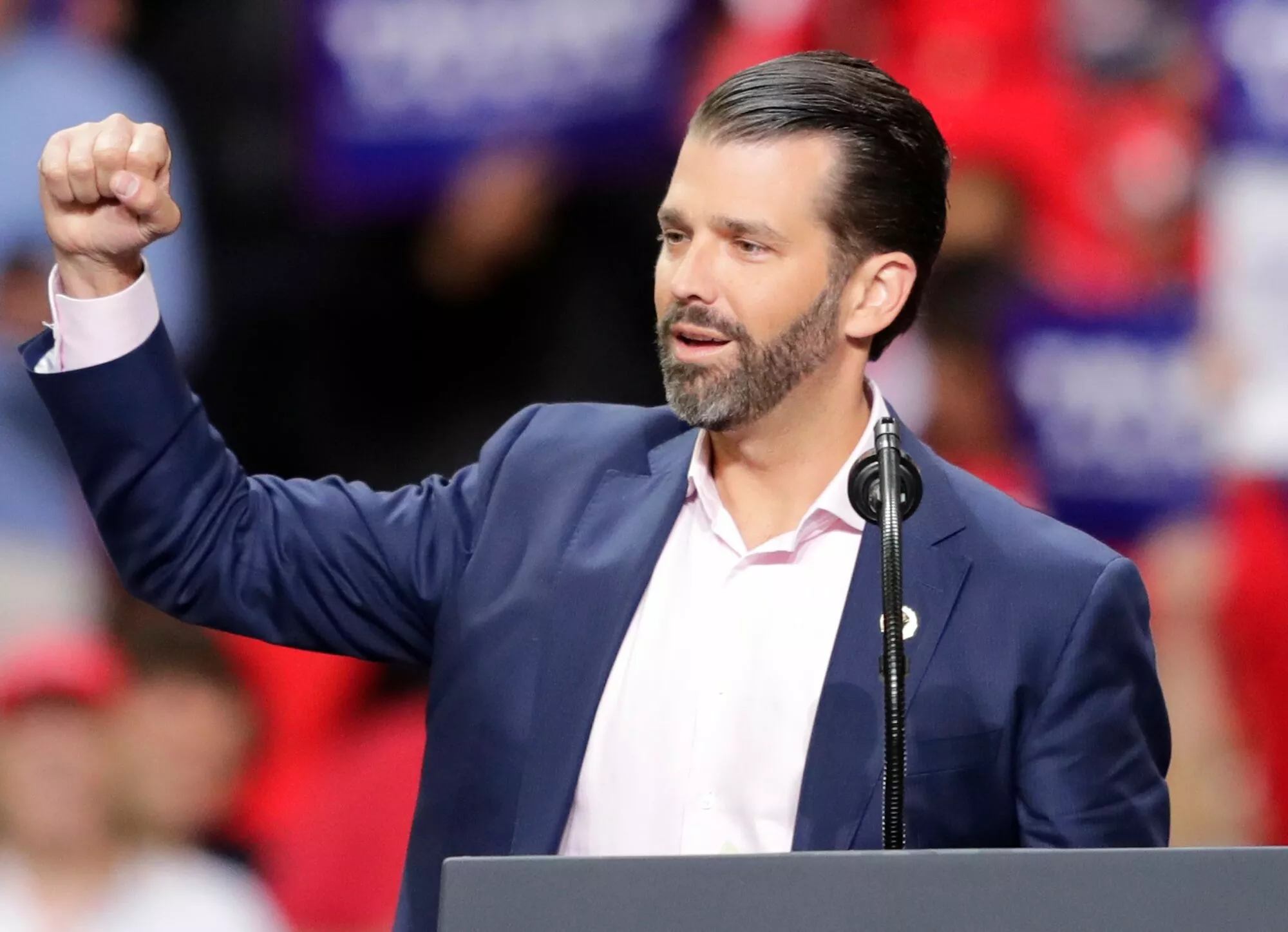
Donald Trump Jr. told Republican state attorneys general not to file lawsuits against prediction markets back in March, The New York Times reported on Thursday.
The President’s eldest child, who served as a strategic advisor at Kalshi and a member of Polymarket’s advisory board, has maintained that operators should be regulated at the federal level. This has long been the opinion of the companies, but it has also drawn the ire of state officials nationwide.
Trump Jr. endorses prediction markets
While speaking at a retreat for Republican state attorneys general in New Orleans, Trump Jr. said that state gaming regulators who attacked prediction markets were being misled by gambling companies who were fearful of losing their “monopolies,” the Times report said, citing four people as sources.
“Don was invited by RAGA to speak at their conference and simply responded to a single question he was asked by the moderator about his opinion on prediction market regulation,” a spokesperson for Trump said. “Despite the dishonest implications from the New York Times, the back and forth lasted approximately one minute of the hour long Q and A and was not a focus of the event.”
Trump’s connection to the nation’s largest operators is notable, particularly as prediction markets have swept the nation. The latest reports showed that Kalshi, Polymarket and Polymarket US generated a combined $50.6 billion notional trading volume during July, smashing the all-time record.
Kalshi revealed that Trump’s role with the company was designated to provide assistance on marketing strategy, not on regulations, according to CNBC.
Polymarket didn’t provide specifics, but said that it believes the Commodity Futures Trading Commission (CFTC) holds the authority to oversee prediction market activity.
Trump family connection to prediction markets
Trump Jr.’s support for prediction markets is parallel to his father’s, who has voiced support for federal authority over prediction markets.
“It is a major industry, and we must protect it,” Trump wrote on Truth Social in May. “Mike Selig, CFTC Chairman, and respected by all, is doing a great job. Thank you Mike!”
Despite that, 44 of 50 possible state attorneys general — including numerous representatives from Republican states — signed a letter sent to the CFTC last month that said that sports contracts fell under the oversight of state gaming officials. These contracts, which allow users to risk money associated with the outcomes of sports events, have proven to be the most attractive commodity at prediction markets.
The CFTC has filed lawsuits against nine states attempting to impede the progress of prediction markets. The first eight were all in blue states until a lawsuit was filed against Kentucky in June.
“It’s unprecedented and overly aggressive for states to try to shut down a federally licensed exchange,” Kalshi said on its website in response to the Times’ reporting. “It’s as if North Carolina wanted to shut down the stock market.”
States pulling back the rope
Prediction markets were largely successful in defending themselves from state officials. That is, until a recent wave of momentum put states back in the fight.
In Nevada, federal courts ordered platforms to temporarily cease operations because they lacked state gaming licenses. Washington judges took similar action, while an Ohio federal judge ruled that defining sports and event contracts as anything other than gambling was “absurd.”
Connecticut, New York, Utah and Wisconsin also reached favorable decisions for the states, several of those opening the door for gaming enforcement by local officials.
The Trade Handle Prediction Markets Take
The disputes involving prediction markets have escalated with extraordinary speed over the last year. Former New Jersey Gov. Chris Christie said this week that the situation will inevitably lead to a Supreme Court case, the outcome of which has the potential to reshape what is already an 11-figure industry.