


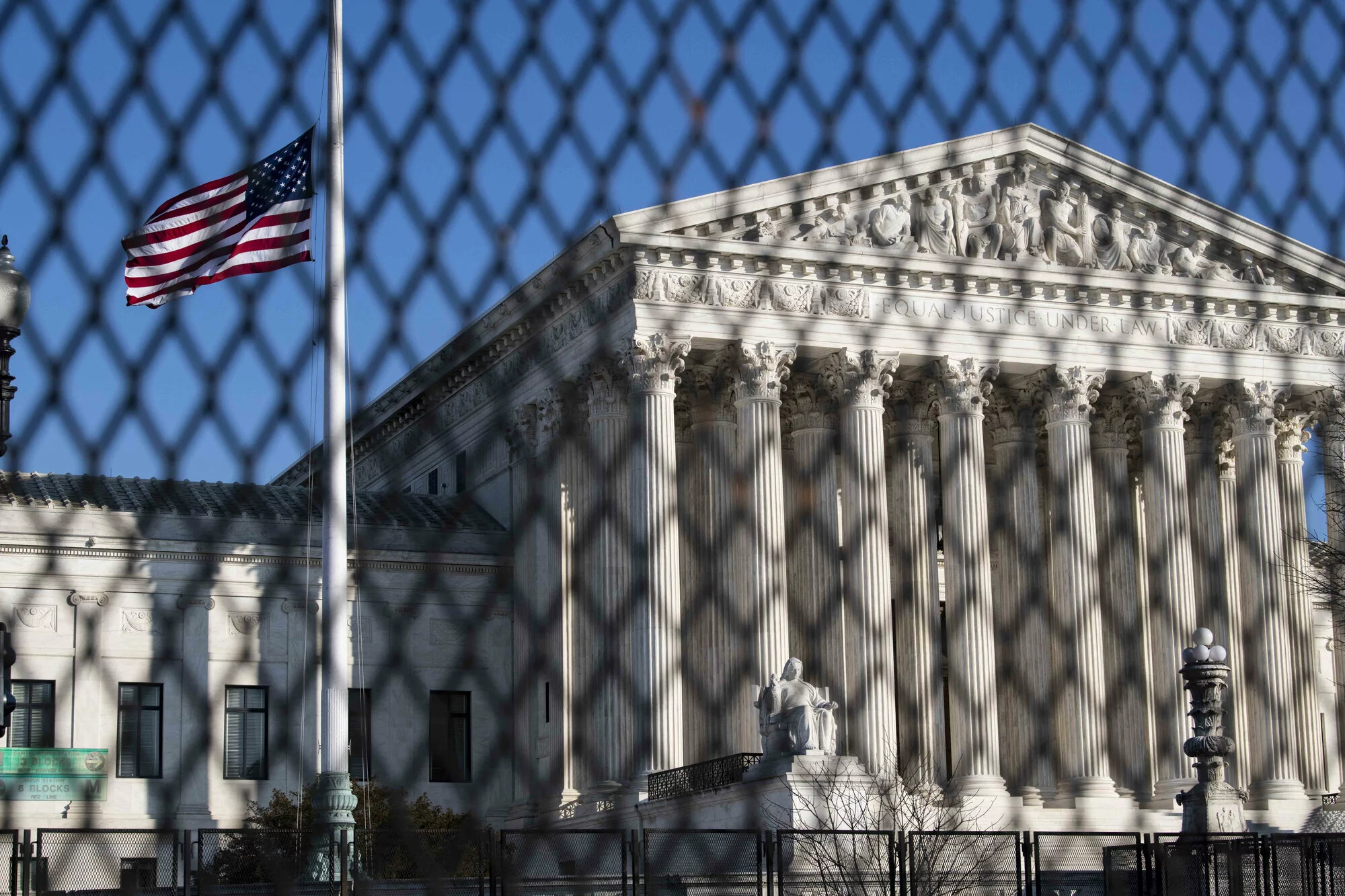
A group of 39 state attorneys general and a Native American tribe implored the U.S. Supreme Court to review regulatory standards for prediction markets.
An amicus brief filed on Wednesday supported New Jersey’s attempt to have the country’s highest judicial authority look at a decision reached by an appellate court earlier this year, which decided that Commodity Futures Trading Commission's (CFTC) federal power to regular event contracts superseded state authority.
States want to review Kalshi, operators
An amicus brief is a legal document that is submitted to a court in support of a party, but by a party that is not directly involved in the lawsuit
The filing relates to the 3rd U.S. Circuit Court of Appeals’ April decision that New Jersey gaming officials cannot apply enforcement against platforms such as Kalshi and Polymarket.
New Jersey’s Division of Gaming Enforcement had issued a cease-and-desist letter to Kalshi in March 2025, prompting the operator to file a federal lawsuit. U.S. District Judge Edward S. Kiel granted the platform a preliminary injunction against state officials, temporarily blocking them from applying gaming regulations.
The new amicus brief claimed that the most recent legal decision in New Jersey fragmented courts across the country.
“[The 3rd Circuit] has splintered the circuits and lower courts with no resolution on the horizon. Only this Court can provide the much needed answer,” the brief read. “It should do so.”
New Jersey is far from the only state that is fighting to take control over prediction markets. At the time of writing, at least 20 states are actively involved in lawsuits against or from operators, and at least 44 have lodged formal complaints or criticism against the platforms.
Supreme Court to settle prediction markets?
The crux of the issue is related to event contracts. These are “Yes” and “No” predictions that are bought and sold by consumers and either win or lose depending on how an event settles.
Prediction markets fall under the CFTC’s purview and involve peer-to-peer trading, which platforms argue makes them distinctly different from gambling products. State officials don’t see it the same way, largely because of sports-centered event contracts that rival licensed sportsbooks and that make up more than 80% of the prediction industry’s trading activity.
Prediction markets have a key supporter in U.S. President Donald Trump. He appointed CFTC Chairman Michael S. Selig, who is the only active member of a five-person Commission.
“It is critically important that the CFTC’s exclusive authority over Prediction Markets [sic] is maintained, and that they will thrive,” the President wrote on Truth Social in May.
The show of support from 39 states in the amicus brief extends beyond party lines and the varying levels of support for President Trump.
Additionally, an amicus brief was filed by the California-based Cabazon tribe last week. This group of natives was a party in the 1987 Supreme Court case that led to the creation of the Indian Gaming Regulatory Act, which codified tribal gaming rights.
“Respected commentators have said that Cabazon ‘may be the most momentous decision in federal Indian law in the last 50 years,’” they wrote. “But that legacy is now under direct threat from Respondent Kalshi and its prediction market cohorts.”
In another twist, four native groups this week launched prediction markets through Kalshi. But just because disagreement over the industry is high does not mean that justices will review the case. The Supreme Court this week published its first series of planned reviews for next year and did not include prediction markets.
The Trade Handle Prediction Markets Take
Although the Supreme Court has not scheduled a review of prediction markets, it can still add one to its upcoming docket. One of the leading reasons for a review would be to settle different rulings across the country, as courts have both ruled for and against states, even though the cases involved the same platforms. The prediction market industry generates billions in trades daily and is only expected to continue growing as competition increases.