


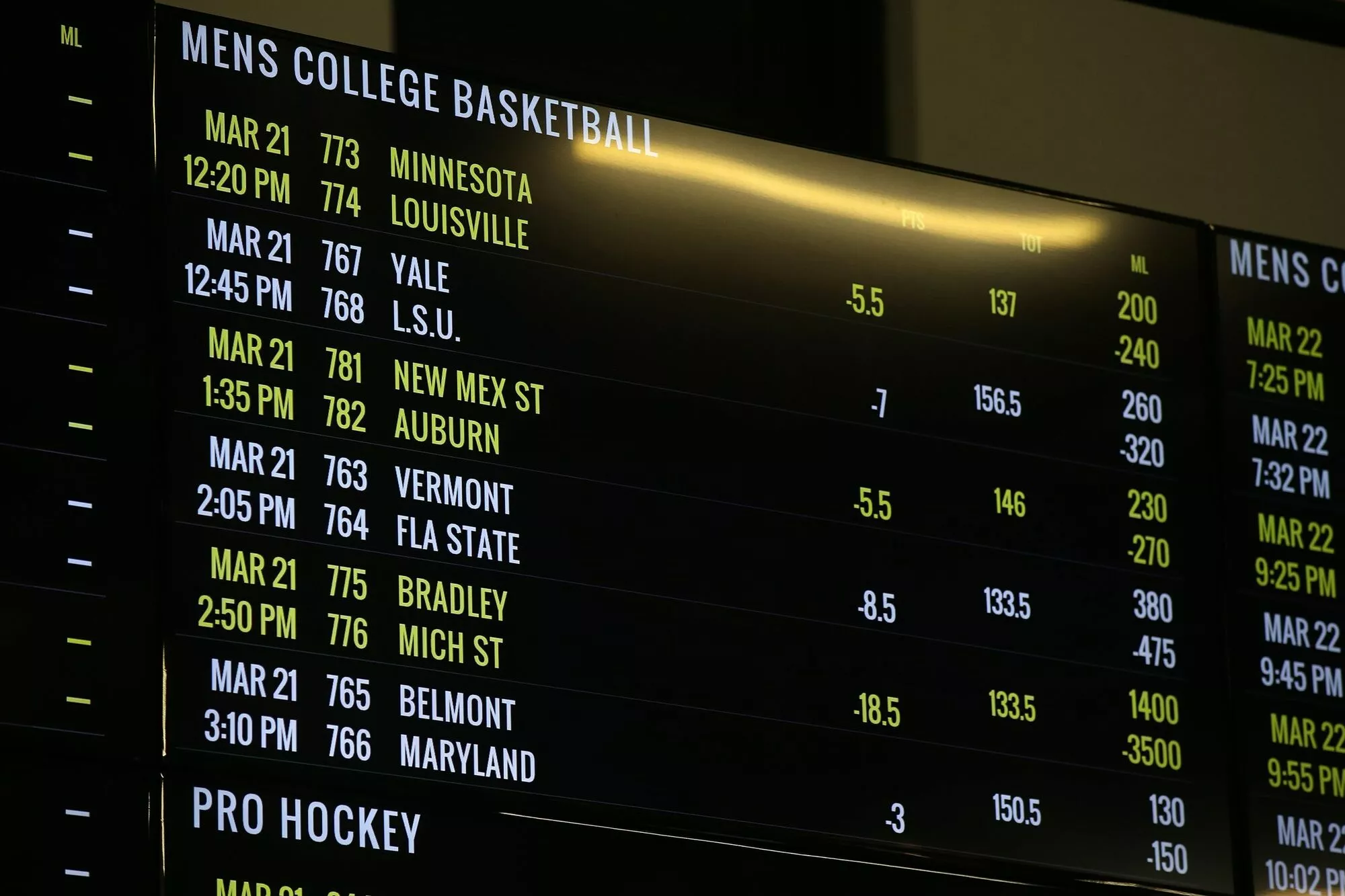
The Commodity Futures Trading Commission (CFTC) ordered prediction markets not to display betting-style odds seen at sportsbooks and casinos on their trading platforms.
According to a Friday report from Bloomberg, the CFTC — the federal body in charge of prediction market regulation — reminded licensed platforms of their operating obligations, which included the limited use of “deceptive” practices. The full letter was posted publicly later the same day.
Prediction markets can’t show odds like sportsbooks
Contracts in prediction markets are listed in a percentage-based system. The listed probability is the likelihood of an event outcome occurring, according to users of that prediction platform. Position prices are typically the same or just $.01 different from the listed probability.
American odds use whole numbers, which carry but do not directly show an implied probability. Odds can be positive or negative, with +100 serving as the dollar-for-dollar middle ground.
Prediction markets
- 35% = 35% chance an event occurs
- Shares typically cost $.34 and or $.35 each
Sportsbooks and casinos
- -120 = 54.5% implied chance
- Include a vig added by the house
The CFTC’s letter specifically noted the prohibited use of American odds values to promote or represent various prediction markets. It also included a footnote that referenced a study that found that American-style odds created riskier behaviors in sports bettors.
“Displaying pricing information for derivatives products in bookmaker-style odds is likely to mislead market participants about the nature of the transaction into which they are entering,” the CFTC’s notice read.
The letter denouncing the use of sportsbook odds was issued to all CFTC-licensed prediction platforms. A source referenced by The Derrick noted that CFTC Chair Michael S. Selig had expressed concerns with this style of promotion.
“As a federally regulated exchange, Kalshi follows CFTC guidance and will comply with the letter by its deadline,” Jacki McGavick, a spokesperson for Kalshi, said to The Derrick in an email.
Piling legal battles
The CFTC’s primary concern, judging by the letter, was distinguishing prediction platforms from sportsbooks. This comes at a time when licensed operators are under piling pressure from state regulators across the country, several of which secured key legal victories in recent weeks.
Although prediction operators have insisted that their CFTC-regulated status, authorized by the Commodity Exchange Act and the U.S. Constitution’s Supremacy Clause, allows them to offer approved prediction markets in any state, local officials have accused the platforms of acting as unlicensed gambling platforms.
New York was the most recent state to challenge prediction platforms’ authority. Attorney General Letitia James filed a lawsuit against Kalshi on July 31, seeking at least $36 billion in damages and penalties. A U.S. District Judge in New York also failed to grant Kalshi a preliminary injunction to halt New York’s enforcement action.
Additionally, a separate federal judge in Utah last week also denied Kalshi’s motion to block the state from enforcing gaming regulations against prediction markets. That ruling was critically important, since Utah doesn’t allow gambling in any form and is ready to bring enforcement against Kalshi, Polymarket, and other operators.
Prediction platforms have consistently branded themselves as financial tools with separate operating systems from sportsbooks. Although the CFTC’s letter serves as a reminder of that distinction, the recent legal losses now present a roadblock to an industry that had grown at unprecedented speed.
The Trade Handle Prediction Markets Take
The CFTC’s letter, while based in legal truth, could be viewed as a sign of damage control. Prediction markets are under attack for their likeness to sportsbooks, and ensuring that they do not display betting odds would bolster the case that they are not true gambling platforms. Removing the betting odds-style display likely won’t stop the legal challenges, which don’t seem to be slowing down.