


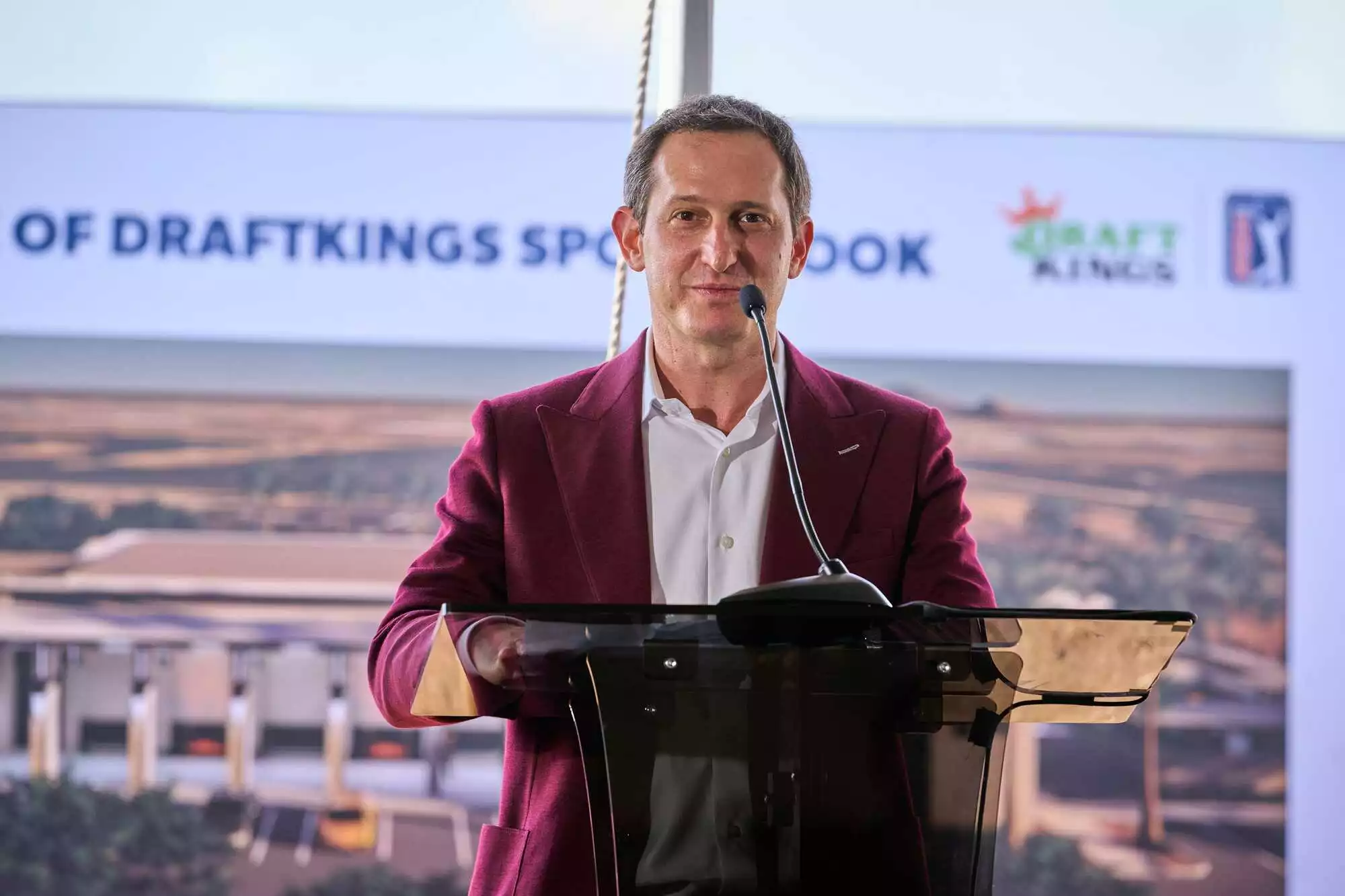
The CEO of DraftKings is bullish on his company’s long-term outlook with or without prediction markets — which are already thriving.
Jason Robins claimed that his company had positioned itself to succeed regardless of the path the gambling and prediction industries followed. This comes after both prediction volume and sports betting totals saw significant growth in recent weeks.
DraftKings prediction markets are a hit
DraftKings launched sports betting in May 2018. About seven-and-a-half years later, it dove into prediction markets with the help of CME Group. It later acquired Railbird Technologies and its Commodity Futures Trading Commission (CFTC) license to move fully in-house with its proprietary exchange, DKeX.
While the platform fell behind competitors during the dog days of the “dead season” of professional sports, the return of the NFL and college football has been kind to the company. Prediction trading reached 2.5 times its July amount, with more than one million customers and close to 10% market share.
Meanwhile, the platform’s sportsbook handle also rose 15% to begin the NFL season, putting the company on pace for roughly $1 billion in yearly adjusted EBITDA.
“I really believe that we are well set up regardless of the outcome,” Robins said during a webinar with Wells Fargo analyst Trey Bowers on Tuesday.
Built for success
Prediction markets have proven to be controversial and divisive in America. Regulatory ambiguities and differences of opinion between platforms, the CFTC, state gaming regulators, and local officials have bred a slew of challenges and legal squabbles, the majority of which recently went against prediction companies and interestholders.
Shutting down prediction markets would ensure that sportsbook companies such as DraftKings did not lose their audience to platforms like Kalshi and Polymarket that offered sports event contracts. Despite that, Robins is hoping that prediction markets will last.
“It’s funny because, if you asked me, I would say I’d rather see them stay, but I would also guess that if prediction markets got shut down by the Supreme Court tomorrow, our share price would pop,” he said, referring to them as a “huge incremental (total addressable market).
Reasons for growth
DraftKings’ 2.5x jump in prediction trading is not purely down to the changing of the calendar.
While football season has generated more interest from traders, DraftKings launched DKeX during the high-volume FIFA World Cup period. That makes the platform’s recent performance even more noteworthy.
Robins still has his eyes set on more. He said on Tuesday that he expects to acquire a multi-million audience of prediction traders before the NFL season comes to a close. DraftKings prediction markets will also be bolstered by busy trading periods that include the MLB postseason, the beginning of the new NBA year, and the upcoming midterm elections.
A key component of DKeX’s success is combos, the prediction equivalent of parlays. Robins said that nearly 30% of NFL activity on Sunday involved combos, a standard that it took the company’s sports betting platform more than five years to reach with parlays.
Robins also revealed that California, Texas, Florida and Georgia — all states that do not have legal sports betting markets — provided a significant chunk of the company’s trading growth. The result could create significant revenue and profits in 2027 at the expense of lower year-end totals.
“We have the best product in the market,” Robins said. “Obviously, those are all investments I’d like to see pay off for many years to come.”
The Trade Handle Prediction Markets Take
DraftKings has the customer base and infrastructure to support a heavy investment in prediction markets. And, as Robins noted, the company’s existing sports betting, fantasy contest, lottery, and online casino operations insulate it from collapse if the prediction wave faces more significant legal pushback. It is worth monitoring DraftKings’ performance over the coming months, as Robins previously said that the company was ready to go “all-in” on growing its market share.