


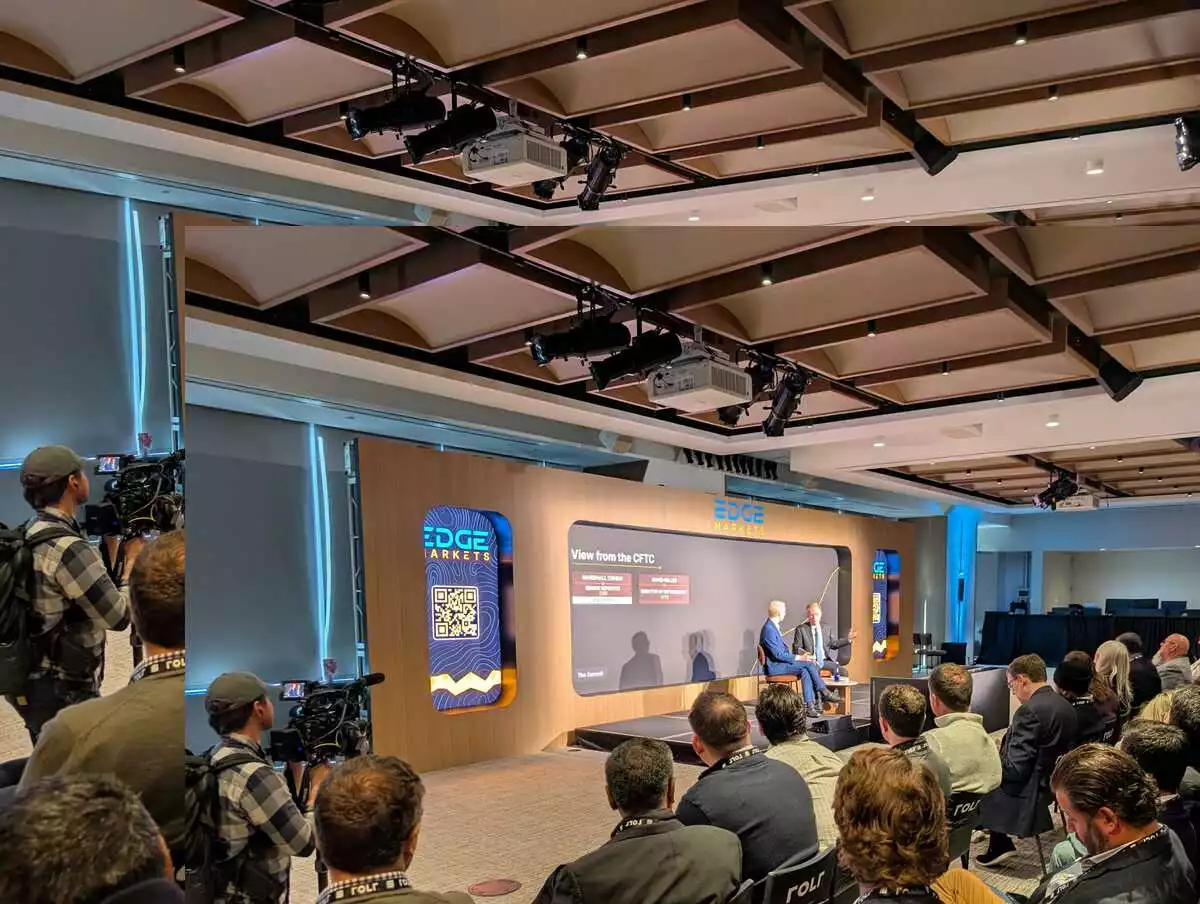
Trade Handle is covering NEXTPredict NYC live from New York City today, October 22, where some of the biggest names in prediction markets are discussing the industry's future. One of the morning's most interesting sessions was View from the CFTC, featuring Commodity Futures Trading Commission (CFTC) Director of Enforcement David Miller alongside CNN senior reporter Marshall Cohen.
The conversation covered everything from insider trading and political election contracts to White House misconduct, offshore exchanges, and potential restrictions on certain markets. Miller offered some particularly interesting comments about ongoing investigations and what the industry should expect from federal regulators.
CFTC Confirms Open Investigations Involving Political Candidates
With the November 3 midterm elections approaching, Cohen asked Miller whether the agency was investigating suspicious activity involving political candidates trading on their own election results. Miller wouldn't discuss specific midterm investigations, but he confirmed the agency has active investigations into candidates who traded contracts tied to their own races.
"We do investigate and have investigated and have open investigations about some candidates," Miller said. He explained that some of those investigations involve candidates making statements inconsistent with the truth, raising potential market manipulation concerns.
Campaign Staff Warned About Insider Trading
Cohen also questioned whether campaign employees could face consequences for using confidential information, including internal polling data, to trade political prediction markets. Miller explained that insider trading isn't simply about possessing information other traders don't have. Instead, the legal issue often turns on whether someone violates a duty of confidentiality.
"Insider trading basically is about a breach of duty," Miller said. He warned that campaign staff who use confidential information obtained through their employment could face enforcement action. "If you go and you take that information and go and trade on an event contract that's premised upon your job, your candidate's role," Miller said, "you're misappropriating that information, and you're committing insider trading."
Election Night Will Have the CFTC's Attention
With potentially thousands of political event contracts set to settle on November 3, Cohen asked whether the CFTC would closely monitor election-night trading. Miller didn't provide specifics about the agency's plans, but his response left little doubt that regulators are paying attention.
"We have a robust surveillance capability at the agency," Miller said, explaining that the CFTC works with exchanges and other entities to monitor suspicious activity. "We're watching," he added.
Miller Defends White House Trading Penalty
Another interesting exchange involved Gabriel Perez, the former White House teleprompter operator who improperly used confidential information about President Donald Trump's speeches to trade on Kalshi. Cohen challenged Miller over the approximately $65,000 civil penalty imposed on Perez, questioning whether the amount was sufficient given the seriousness of the misconduct.
Miller defended the settlement, explaining that Perez was also required to surrender his improper trading profits. "This action shows that we are serious about policing insider trading regardless of who you are," Miller said. He also pointed to the agency's updated cooperation policy, explaining that investigators considered Perez for assistance after they discovered his trading activity.
Polymarket's Offshore Platform Raises Questions
Cohen pressed Miller about Polymarket operating both a federally regulated U.S. platform and a separate international exchange offering contracts that may not be permitted domestically. Miller declined to discuss specific potential investigations but said trading on an offshore platform doesn't automatically take someone outside the CFTC's jurisdiction.
He pointed to enforcement complaints involving activity on Polymarket's international platform, where the agency asserted jurisdiction in the Southern District of New York. Miller also emphasized the CFTC's preference for bringing platforms into the U.S. regulatory system rather than relying entirely on enforcement actions against companies operating outside it.
Are Mention Markets in Trouble?
The session concluded with a discussion of mention markets, which let traders buy contracts based on whether someone says specific words or phrases during an event. Following recent CFTC advisories highlighting manipulation risks, Cohen asked whether these contracts could eventually disappear from regulated exchanges.
"I wouldn't be so bold as to profess whether a certain market is on the way out or not," Miller said. He acknowledged that the agency remains concerned about these contracts and is continuing to monitor their potential for fraud and manipulation.
The Trade Handle Prediction Markets Take
Miller's appearance at NEXTPredict NYC offered a firsthand look at the CFTC's approach to prediction market enforcement, particularly as the industry prepares for another major election. His confirmation of open investigations into political candidates stood out, but the broader message mattered just as much.
Federal regulators are closely monitoring trading activity, examining potential insider trading, and evaluating which event contracts pose the greatest risks. As Trade Handle continues its live coverage from NEXTPredict NYC, the session made one thing clear: the industry's rapid growth is bringing increased attention from the people responsible for policing it.