

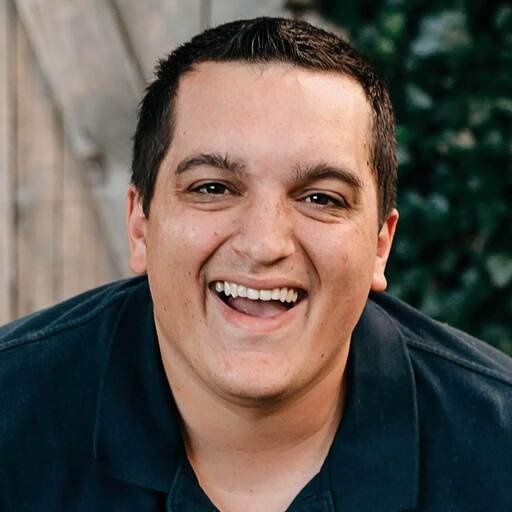
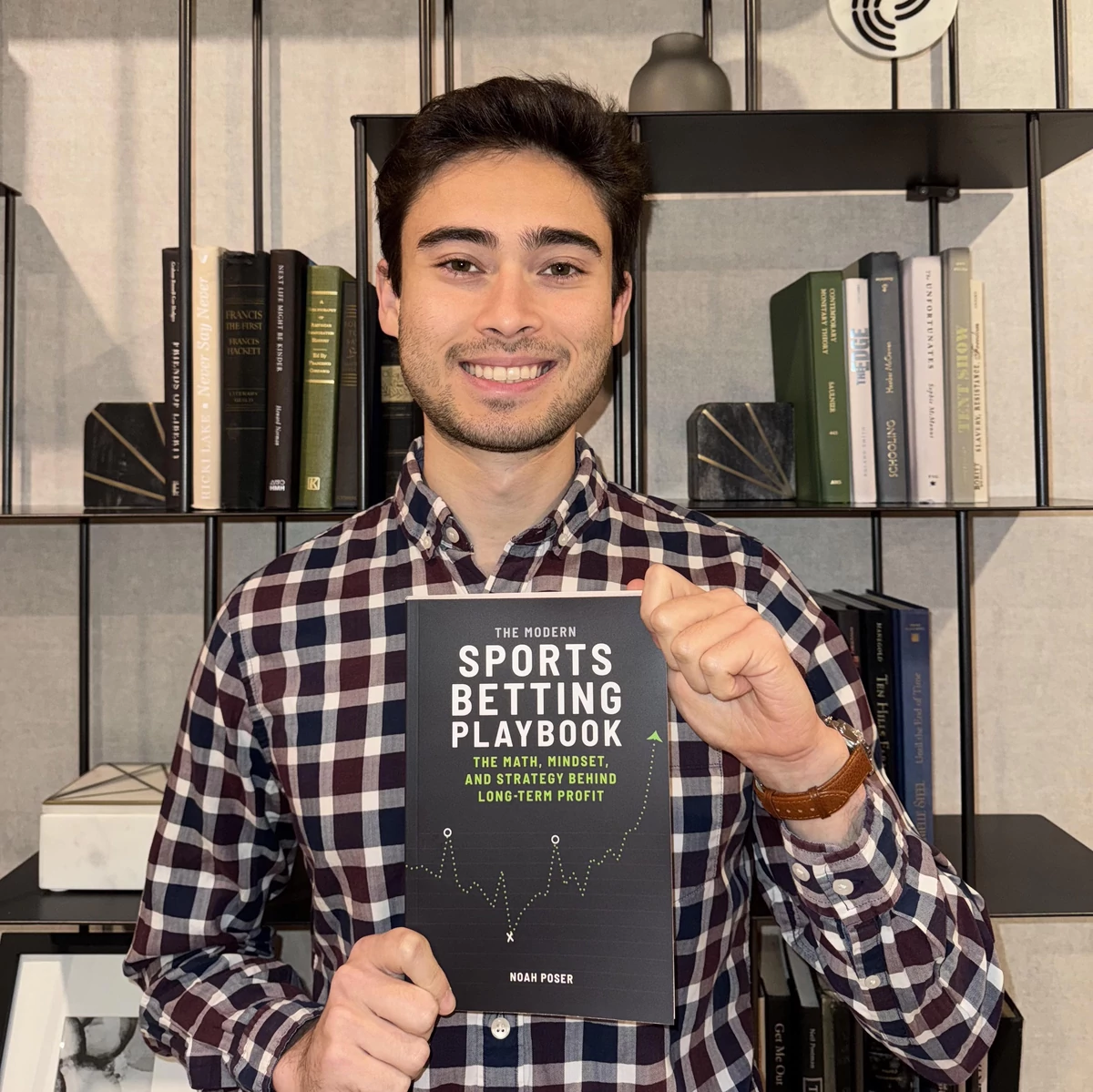
Noah Poser has a problem that most sports traders would probably love to have. He says he became successful enough on traditional sports platforms that they started limiting how much money he could put into his positions. Eventually, he decided he'd had enough and took his trading elsewhere.
That elsewhere was prediction markets, and he hasn't looked back. Poser, who works in banking technology in New York, recently joined Trade Handle for an exclusive interview after we connected at NEXTPredict NYC. He's also the author of The Modern Sports Betting Playbook, released in September, which shares the strategies he's developed over years of trading sports.
We talked about his move to prediction markets, why he's changed his mind about cashing out early, and what he wishes somebody had told him when he first started trading on exchanges. That last part was especially interesting because it involved a mistake he admitted had cost him money.
Exclusive Interview With Noah Poser
We sat down with Noah Poser to discuss his move to prediction markets, the strategies behind his success, and his new book. Watch the full interview below to hear his insights and advice for traders.
Getting Limited Was Getting Old
Poser didn't stumble into sports trading because he had a feeling about Sunday's football games. He grew up playing competitive strategy card games, became interested in game theory and poker, and eventually studied finance and data science at NYU. Finding small advantages has long interested him.
When traditional sports platforms became legal in New York, he started putting that knowledge to use. He traded at high volume and developed strategies he believed could generate profits over time. The problem was that the platforms weren't always interested in letting him continue.
Poser explained that profitable customers can eventually have their transaction limits reduced to practically nothing. You might identify a great opportunity, but that doesn't do much good if you're only allowed to put a few dollars into it. About a year and a half ago, he began moving his activity to prediction markets. Today, he says all of his sports trading volume goes through those exchanges.
The biggest difference for him is the ability to trade against other market participants rather than directly against the platform. He also believes he's paying less in transaction costs than he did previously, although those costs still vary depending on the trade. Most importantly, he can trade at a scale that wasn't possible for him before.
He's Not Trying to Predict Every Winner
One thing became pretty clear when Poser started explaining his strategies. He's not particularly interested in proving he knows more about sports than everyone else. He's interested in finding prices that don't quite match what he believes a contract is worth. That distinction is central to his new book.
The Modern Sports Betting Playbook came out in late September after years of friends asking Poser how he approached sports betting and trading. He wanted something that could help beginners understand the basics while also offering more experienced traders a look at the strategies he's actually used.
The opening chapters cover how sports markets work, along with probability and the mathematics behind pricing. The second half gets into specific strategies, including how Poser looks for opportunities and how promotional offers can help someone build an initial bankroll.
His approach isn't particularly glamorous, at least not compared with the massive winning tickets people love posting online. Poser told us that some of the opportunities he looks for might offer an advantage of only 1% or 2%. Others might be closer to 3% or 4%. He's more interested in finding those situations repeatedly than trying to make one enormous profit from a single game.
The idea is that a small, genuine advantage can become meaningful over thousands of transactions. Of course, that only works if the advantage is real, the costs don't eat it up, and the trader can handle the inevitable losses along the way.
Prediction Markets Changed His Mind About Cashing Out
We asked Poser something that came up repeatedly during our conversations with traders at NEXTPredict NYC. How often are people actually holding their contracts until settlement anymore? Think about an NBA game where you buy a team's contract at 37 cents. That team suddenly hits a few three-pointers, grabs the lead, and the contract jumps to 50 cents. You could sell right there, take the profit, and move on without caring who wins.
Poser said he's doing more of that now, which is a pretty significant change from how he approached traditional sports platforms. In his book, he generally advises against taking early cash-out offers on those platforms. The reason is simple: he believes the prices offered to customers often make exiting more expensive than it's worth.
With prediction markets, he's found that he has more control over the process. He can place an order at a price he's comfortable with and potentially find another trader willing to take the other side. That doesn't mean exiting is free or that every order will get filled. But Poser said the exchange structure has made him much more willing to consider selling a profitable position before the event ends.
He used an example of a contract moving from 20 cents to 80 cents. If settlement is still a long way off, or there's plenty of time for things to go wrong, he might decide that taking the profit makes more sense than holding out for the final 20 cents. He rarely approached it the same way before switching platforms.
A 41-Cent Order Can Become a Bad Trade in Seconds
When we asked Poser what advice he'd give someone opening a prediction market account for the first time, he could have given us the standard answer about starting small and only trading events you understand. Instead, he talked about adverse selection.
It's a term that sounds more complicated than the problem actually is, and Poser admitted that learning about it cost him money. Let's say you're following an election market and believe a particular contract is worth 41 cents. You place a limit order at that price, hoping somebody will sell you the contracts. Nothing happens immediately, so your order sits there waiting.
Then a new poll comes out. Suddenly, the information that made 41 cents look attractive is no longer accurate. Maybe the contract should now be trading closer to 35 cents. But unless you've canceled your order, you're still offering to buy at 41.
Somebody else sees that price and happily sells to you. You've received exactly the price you requested, but the market has moved on without you. What looked like a smart purchase a few minutes earlier has become a bad one.
Poser explained that this creates an imbalance that traders need to understand. When new information makes your order less attractive, other participants may be eager to fill it. When the market moves in your favor, those same participants have less reason to trade at your price.
This problem can get expensive when you're placing a lot of orders. Someone monitoring one basketball game can probably react pretty quickly to an injury or a sudden change in momentum. Somebody with orders sitting across a dozen different events might not notice that the information behind one of those prices has changed.
Poser advises paying attention to your resting orders and canceling them when circumstances change. For beginners, he suggested sticking to one or two positions at a time rather than trying to watch everything at once. He also pointed out that you can choose to execute trades immediately instead of waiting for a limit order to fill, although that can come with higher costs.
Three Things Poser Wants Traders to Understand
After hearing how Poser approaches the markets, a few points kept coming up.
- The price matters more than your confidence. You can correctly predict an outcome and still make a poor trade if you paid too much for the contract.
- You don't have to wait for settlement. Poser has become more comfortable selling contracts early when prices move significantly in his favor.
- You can't forget an open order. New information can change a contract's value, even when your original order stays at the same price.
Following those principles doesn't guarantee profitability. Poser's point is that trading involves a lot more than choosing an outcome and hoping you're right.
The Industry Grew Faster Than He Expected
Poser has been around financial markets long enough to know that things can change quickly. Even so, he admitted he never expected prediction markets to take off quite as they have. Three or four years ago, he couldn't have imagined this model attracting so much activity away from traditional sports platforms. Now he's moved his own sports trading activity over entirely.
That doesn't mean he's convinced everything will continue growing without interruption. He's following the ongoing legal disputes between prediction market exchanges and state regulators closely. He recognizes that the industry's regulatory structure, including differences in taxation and operating restrictions, remains a major source of disagreement.
For Poser, those legal questions aren't just interesting headlines. Trading sports provides income outside his regular career, so any changes to which contracts exchanges can offer could affect him directly. He hopes sports contracts remain available and believes the exchange model offers a better arrangement for traders. In his view, having participants trade against one another rather than directly against a platform allows more money to remain with customers. Still, he acknowledged that nobody really knows how all the legal battles will play out.
Where to Find His Book and More Trading Advice
Poser's The Modern Sports Betting Playbook is available on Amazon in print and Kindle formats. The book walks through the fundamentals of sports markets before moving into the probability-based strategies he's developed through his own trading experience. It also covers promotional opportunities and ways to approach building a bankroll.
Outside the book, Poser shares educational content on Instagram, X, and YouTube under Noah Wins Bets. He told us he's always interested in connecting with other people who enjoy discussing markets and trading strategies.
The Trade Handle Prediction Markets Take
We've heard plenty of executives explain why prediction markets will change the financial industry. Noah Poser gave us a different perspective, and frankly, it was refreshing to hear from someone who's already changed how he trades because of them.
His experience helps explain why certain traders are drawn to exchanges in the first place. Being able to trade larger amounts, potentially pay lower costs, and close positions without relying on a traditional cash-out offer can make a difference, particularly for someone placing a high volume of trades.
But the part of our conversation that stuck with us most was his explanation of adverse selection. It's easy to think you've done everything right because you researched an event and found a price you liked. If the market changes while your order is waiting, though, that original price might become the very reason somebody else wants to trade with you.
We think that distinction matters for anyone getting started. Prediction markets give you more control over how you trade, but they also put more responsibility on you to understand what's happening. Sometimes the most valuable lesson isn't figuring out which side will win. It's knowing when the price you wanted is no longer worth paying.