


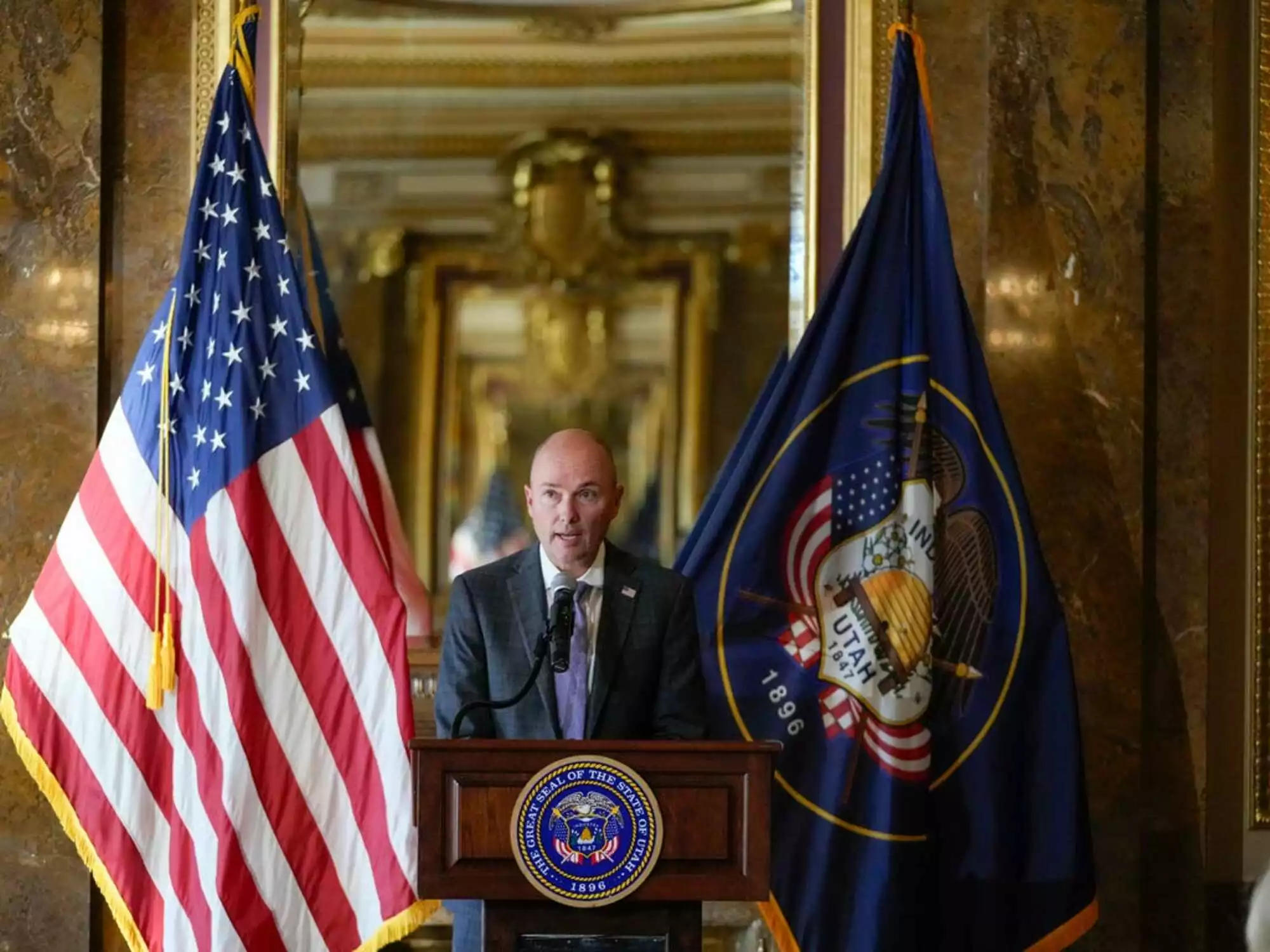
A federal judge affirmed Utah state officials’ right to enforce their anti-gambling laws against prediction markets.
Utah is one of the strongest anti-gambling states in the country. Kalshi, Polymarket, and other platforms have been able to circumvent state gambling licensing requirements through their Commodity Futures Trading Commission (CFTC) approval, but the latest court ruling stated that wasn’t enough to blatantly ignore state regulators.
Utah can regulate prediction markets
Kalshi sued Utah in February, asking a federal judge to prevent state officials from applying gambling restrictions to their prediction markets. This came at a time when the state was prepared to adopt legislation that would effectively outlaw prediction operators from conducting business inside state lines.
U.S. District Judge Robert Shelby denied the request to block Utah’s regulations on Tuesday, ruling that the federal law cited in Kalshi’s complaint did not prevent the state from enforcing its laws.
Additionally, Utah’s absence of a legal sports betting market meant that there isn’t an alternate path through state licensing, in the event that prediction operators decided to comply with state requirements — which they have not done in any state at the time of writing.
Kalshi released a statement after the decision, stating it disagreed with the outcome and planned to appeal.
Prediction operators have consistently cited key differences, such as their peer-to-peer system and use of public market sentiment as opposed to house-made odds, to support their claims that they are not the same as gambling platforms. A bag of mixed results in courts across the country is reflective of the ambiguity of prediction markets, which easily eclipsed $50 billion in combined notional trading volume in June.
Differences pile up
Despite losing its case in court, Kalshi can still accept trades from Utah-based users. Utah Attorney General, Derek Brown, said that enforcement against Kalshi and other prediction markets would come, but not before he considered additional measures.
“Gambling is gambling, no matter what any company calls it,” Brown said.
The state Governor also celebrated the ruling, which upheld Utah’s standard of banning gambling and gambling-adjacent activities.
“[Prediction markets are] causing tremendous harm to countless American families,” Gov. Spencer Cox (R) said after the ruling.
Prediction platforms consistently justify their nationwide operations through their CFTC-regulated status and the U.S. Constitution’s Supremacy clause. Essentially, as long as they are compliant with the rules established by a federal body, they believe they have the power to operate in any jurisdiction in America, even if it is against the wishes of state and local officials.
The CFTC also has a key supporter in President Donald Trump, who appointed the five-man Commission’s only active chair member, Michael S. Selig.
Courts in Maryland, Nevada, Ohio, New York and Wisconsin have now ruled against prediction markets in similar cases over the right to operate. Arizona, Minnesota, New Jersey and Tennessee judges ruled in favor of the operators.
Other states are also engaged in ongoing battles, including New York, which submitted another massive lawsuit at the end of July.
The Trade Handle Prediction Markets Take
It’s difficult to predict what the next court ruling will be, since the decision seemingly has no precedent and is a matter of interpretation from judges across the country. Utah successfully winning the right to seek enforcement against prediction markets is another loss for the prediction industry, which is growing at extraordinary speed, despite the piling defeats in court. It seemed as if the growing intervention of the CFTC had given prediction markets all of the momentum they needed one month ago, but that is now in doubt.