


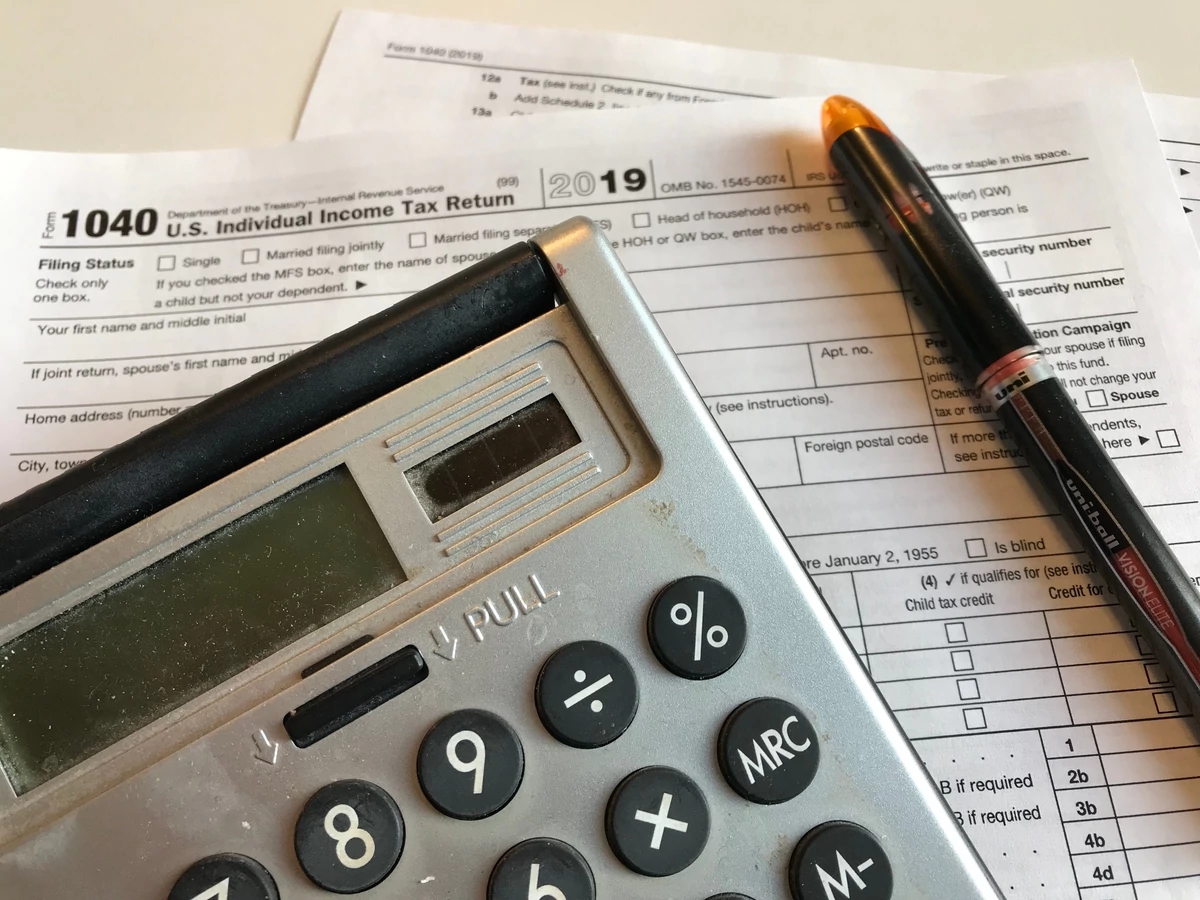
Nobody gets into prediction markets because they're excited about doing their taxes. You're there to follow events, find contracts at attractive prices, and hopefully make some money along the way. But once those profits start adding up, another question comes up: How much of that money do you actually get to keep?
The answer isn't quite as straightforward as you might expect. Prediction markets are still relatively new to many Americans, and their tax treatment isn't always as simple as reporting profits from a traditional stock investment. Depending on what you're trading and how the contracts are classified, different tax rules may apply.
The IRS Doesn't Care How New the Industry is
Here's the first thing you should know. Making money on a prediction market platform generally creates income you need to account for when filing your taxes. It doesn't matter whether you made that money predicting an election, an economic announcement, or a sporting event's outcome. Let's say you purchase 100 contracts for 40 cents each. That's a $40 investment, and if those contracts settle at $1 apiece, you receive $100. You've made $60 before accounting for any fees.
That doesn't mean you owe taxes on the entire $100 payout. Your original $40 purchase cost matters when calculating the actual gain. The exact tax treatment depends on the contract, but understanding what you earned versus what you received is a good starting point.
The Complicated Part is Figuring Out What You Traded
If you've ever filed taxes after selling stocks, you're probably familiar with capital gains. Buy something for one price, sell it for more, and report the difference under the rules that apply. Prediction market contracts aren't always that simple. Some contracts may receive capital gains treatment, while others could fall under different provisions of the tax code. There's also Section 1256, which gives certain qualifying financial contracts special tax treatment.
Just because a prediction market operates on a federally regulated exchange doesn't automatically mean every contract qualifies. That distinction matters for anyone trading regularly. Two people could finish the year with identical profits but face different tax consequences depending on the contracts involved. We wouldn't recommend assuming every event contract gets treated like a stock or a traditional futures contract.
You Don't Have to Wait for the Event to Make Money
One of the more interesting things about prediction markets is that you can make a profit without ever finding out how the event ends. If you buy a contract at 30 cents and its price climbs to 45 cents, you can sell your position rather than waiting for settlement. Plenty of traders do exactly that. Suppose you bought 200 contracts at 30 cents each, spending $60. You sell them a few days later for 45 cents apiece and collect $90. That's a $30 profit before fees, even if the event is still weeks away.
For tax purposes, selling the contract can matter just as much as holding it until settlement. Generally, there's a difference between a position increasing in value and actually realizing a gain by selling it. Certain contracts, including those qualifying under Section 1256, can also have year-end mark-to-market requirements. In other words, don't assume that leaving your money on the platform means you've avoided a taxable transaction. The IRS generally cares about what happened with the contract, not whether you transferred the proceeds back to your bank.
Your Losing Trades Could Be the Bigger Headache
Most traders are happy to talk about their winners. Losses tend to get far less attention, especially when tax season rolls around. Unfortunately, those losing positions can be just as important as the profitable ones. Imagine finishing the year with $2,000 in gains and $1,500 in losses. You might reasonably assume that leaves you with $500 in taxable profit. Depending on how your contracts are classified, however, the calculation might not work quite that neatly.
Capital losses have specific rules governing how they offset gains and other income. Qualifying Section 1256 contracts follow their own provisions, while transactions classified under wagering-related tax rules can face different limitations. The important point is that not every losing trade automatically cancels out a winning one dollar for dollar. This matters especially for active traders. Someone could have thousands of dollars moving through their account and still finish the year with only a modest overall profit. Their tax return still needs to reflect the applicable treatment of those transactions.
A Spreadsheet Might Save You a Lot of Trouble
We know keeping a spreadsheet probably isn't anyone's favorite part of trading. But trying to remember what happened across hundreds of contracts several months later sounds considerably worse. Even a basic record of your activity can make tax season easier.
Here's what we'd recommend keeping:
- Purchase information: The date, number of contracts, and total amount spent.
- Sales and settlements: When positions closed and how much money came back.
- Trading fees: Charges associated with your transactions.
- Profits and losses: The results of completed trades.
- Platform statements: Downloadable transaction histories and annual reports.
- Tax documents: Any forms your exchange provides.
It's also worth separating trading activity from ordinary account transfers. Depositing $500 into Kalshi doesn't mean you've earned $500, and withdrawing money doesn't automatically establish how much taxable income you made. Your individual transactions tell a much more useful story.
If you trade on multiple platforms, make sure you're keeping records from each one. Otherwise, you could find yourself trying to piece together an entire year of activity from incomplete information.
No Tax Form Doesn't Mean No Taxes
A misconception comes up with all sorts of online financial platforms. People assume that if a company doesn't send them a Form 1099, they don't have anything to report. That's not necessarily true. Your responsibility to report taxable income doesn't depend entirely on whether a platform issues paperwork. Exchanges have their own reporting requirements, and the documents you receive may depend on the type of activity in your account.
Some platforms provide annual transaction summaries that can be useful even when they aren't traditional tax forms. Kalshi, for example, provides access to tax information and annual profit-and-loss statements. Depending on your activity and applicable reporting requirements, you may also be able to access certain tax forms. Those documents are helpful, but they don't necessarily answer every question about how your particular contracts should be reported.
Where You Live Can Change the Final Number
Federal income taxes get most of the attention, but your state might want a share of your profits as well. Whether that's the case depends largely on where you live and how your state treats the income. No single state tax rule applies to every prediction market trader in America. Some states don't have an individual income tax, while others impose their own rates and reporting requirements. Some states may also treat certain types of income differently than federal law.
That means your total tax bill could look different from someone else's, even if you both made the same amount trading. Don't assume that using an exchange based somewhere else changes your home state's requirements. Your residency and the nature of your income generally matter far more than the platform's location.
There's a New Tax Rule Worth Watching in 2026
One change could make tax season particularly interesting for certain traders this year. Beginning with tax years after December 31, 2025, federal law limits deductions for transactions classified as wagering activity to 90% of qualifying losses. Those deductions also cannot exceed the applicable gains.
Consider someone who finishes the year with $10,000 in gains and $10,000 in losses from transactions subject to that provision. Financially, they've broken even. But with only 90% of those losses deductible, they could still have $1,000 in taxable income before other tax considerations.
Now, here's where we need to be careful. That doesn't mean every prediction market contract automatically falls under this rule. Whether it applies depends on how the transactions are classified for tax purposes, and that classification is precisely what makes this subject complicated. For traders with substantial activity, we wouldn't leave this to guesswork.
Frequently Asked Questions
Do you have to pay taxes on Kalshi winnings?
Generally, profits earned through Kalshi need to be considered when filing your federal income taxes. The exact reporting treatment depends on the contracts you traded and how those transactions are classified. Keep your transaction records and review any tax documents the platform provides.
Are prediction market profits capital gains?
They can be, but you shouldn't assume they always are. Different financial contracts can fall under different tax provisions, including special rules for qualifying Section 1256 contracts. The correct classification depends on the specific contract and applicable tax law.
Can you write off prediction market losses?
Potentially, although the rules depend on the type of transaction. Capital losses and qualifying Section 1256 losses follow different provisions, while transactions subject to Section 165(d) have their own limitations. Beginning in 2026, that last category is subject to a 90% deduction limit for qualifying losses.
Does Kalshi send tax forms?
Kalshi provides tax documentation when applicable reporting requirements are met, including certain Forms 1099. The platform also offers an annual profit-and-loss statement through its tax information section. Review those records rather than assuming they'll automatically calculate every part of your tax return.
Do you owe taxes if your profits stay in your account?
Leaving money on an exchange doesn't necessarily delay your tax obligations. Selling contracts or receiving settlement proceeds can create taxable gains even when you never withdraw the funds. Some qualifying contracts may also be subject to year-end mark-to-market rules.
What if you lose more money than you make?
Your ability to deduct those losses depends on how the transactions are classified. Some losses may offset gains or qualify for other deductions, while different categories have stricter limitations. Losing money overall doesn't automatically mean every loss can be deducted in full.