

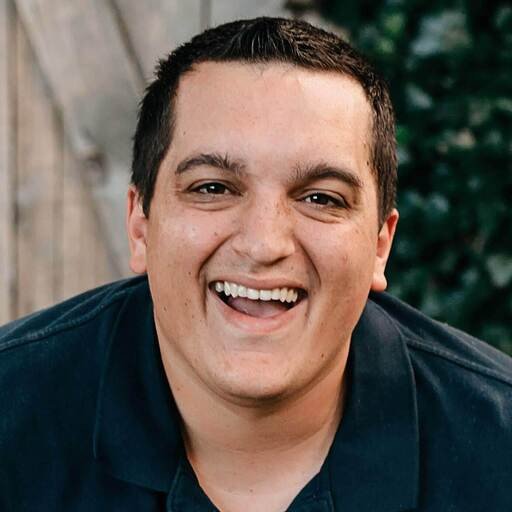
Laurie Buckhout apparently liked her chances in North Carolina’s 1st Congressional District enough to put money on herself. That decision ended with the Republican congressional candidate paying a $2,589.96 fine and losing access to Kalshi for three years. Buckhout says she simply didn’t realize that trading on her own election broke the prediction market platform’s rules.
The violation involved less than $1,000 worth of contracts connected to Buckhout winning her race against Democratic Rep. Don Davis. The two are meeting again after Davis narrowly won their 2024 matchup with 49.5% of the vote compared with Buckhout’s 47.8%. Their 2026 rematch is expected to be one of the country’s more competitive House races.
Buckhout Says She Made a Dumb Mistake
There wasn’t much ambiguity about why Kalshi had a problem with the trade. Its rules prohibit people from trading on markets when they are decision-makers or otherwise influence the outcome. A candidate purchasing contracts on their own election falls pretty squarely into that category.
Buckhout cooperated once Kalshi began looking into the activity and agreed to settle the case. She also didn’t offer much of a defense, saying she was unaware of the rule when she made the trade. “I bet on myself. Literally. It was a dumb mistake,” Buckhout said, adding that her career as a Kalshi trader was “short-lived.”
Here’s where the case ultimately landed:
- Less than $1,000 in contracts were purchased
- Buckhout agreed to a $2,589.96 fine
- Kalshi suspended her for three years
- She cooperated with the investigation
- The contracts were directly tied to her own election
Kalshi Also Came Down Hard on George Santos
Buckhout’s case was part of a larger Kalshi investigation involving political figures trading in markets where they had inside knowledge or influence. Former New York Rep. George Santos also got caught up in it, although his punishment was considerably more severe. Kalshi permanently removed Santos from the platform and fined him more than $70,000.
Santos had traded on whether he would attend February’s State of the Union address. Kalshi said he did not cooperate with its investigation, unlike Buckhout. Santos responded publicly by calling Kalshi an “unserious company.”
Politics Creates Some Tricky Lines for Prediction Markets
Political contracts create an integrity problem that goes beyond somebody simply knowing more about an election than everyone else. Candidates and campaign officials can possess information unavailable to the public, but they can also make decisions that directly change the outcome traders are trying to forecast. That makes figuring out who should be allowed into certain markets especially important.
Kalshi says it actively watches for exactly this kind of activity. Sara Lang, the company’s head of corporate development, recently told WRAL that its surveillance runs continuously, while acknowledging that some people will still slip through. These recent cases offer a very public look at what happens once Kalshi identifies one of them.
The Trade Handle Prediction Markets Take
The Buckhout situation is almost a perfect example of why political markets need firm insider rules. Her position was relatively small, and she cooperated once Kalshi raised the issue, but neither changes the basic problem. You can’t have candidates trading on whether they themselves win an election.
For Kalshi, catching the trade is arguably more important than the size of the fine. Prediction markets ask people to trust that their prices reflect a fair marketplace, especially as political trading becomes more popular. Showing that even the person whose name is on the ballot can get kicked off the platform is a pretty clear way to draw that line.