


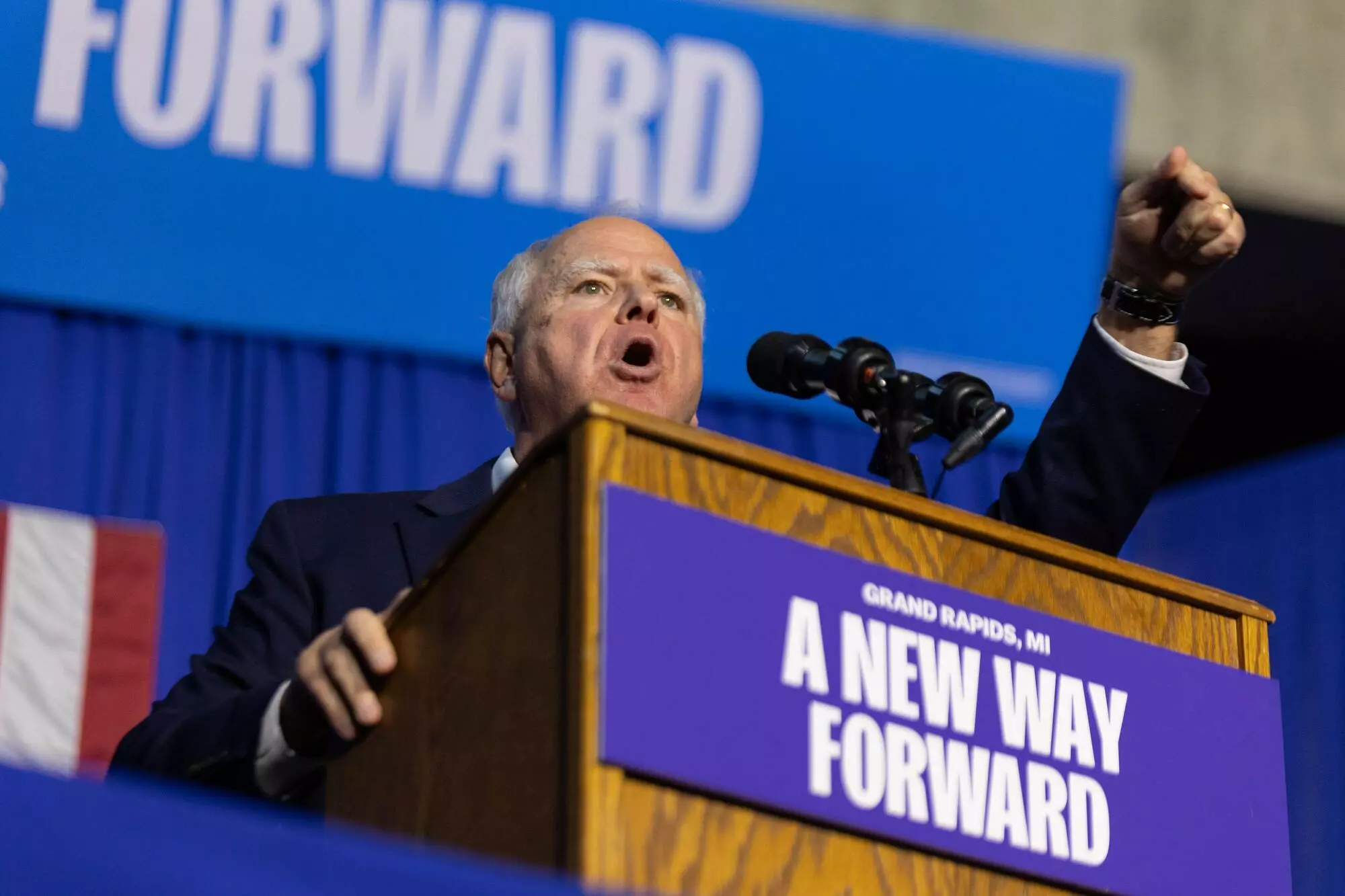
Minnesota Gov. Tim Walz (D) approved an executive order on Tuesday that outlawed state employees from using privileged information to trade at prediction markets.
The order came one day after Minnesota’s Walz-approved ban on prediction markets was overruled by a temporary injunction granted by a federal judge. Without the verdict, the statewide ban on operators such as Kalshi and Polymarket would’ve gone into effect on Saturday.
Minnesota’s prediction market executive order
Walz’s new executive order forbids state government workers and affiliated employees from using confidential information — regardless of whether that information is directly obtained or supplied to them — to profit from prediction operators. Anyone found in violation may face a range of penalties, including the loss of their job.
“State employees serve the public and shouldn’t make money off insider information,” Walz said in an announcement confirming the signing of the executive order.
Walz, who was the vice president in Kamala Harris’s failed presidential campaign in 2024, also called out President Donald Trump for his direction of the Commodity Futures Trading Commission (CFTC), which levied a lawsuit against Minnesota and its ban on prediction markets.
The CFTC has received full-throated support from Trump under the leadership of Michael S. Selig, a Trump-appointee and the only member of what can be a five-person circle of chairman.
“It is clear that the Trump administration and companies like Kalshi are more interested in lining their pockets than protecting public trust and keeping people safe,” Walz wrote. “Regardless of Trump’s grift, I am taking executive action to reinforce the strong ethical standards we have in Minnesota.”
Cracking down on insider trading
Prediction market operators have taken various steps to curtail insider trading, although fears still exist.
Minnesota state Sen. Matt Klein (D-Mendota Heights) was suspended from Kalshi in April after it was revealed that he spent money predicting the outcome of his congressional candidacy. Klein told the Minnesota Reformer that he risked $50 last Oct. and agreed to serve a five-year ban from the site and pay a $539.85 fine, according to Kalshi.
Kalshi approved an outright ban on politicians and athletes trading on themselves in March. However, this ban does not extend to campaign staffers or general federal or state employees.
Detection technology at prediction markets has also been used to identify instances of suspicious trading, which are enforced after the fact and do not address losses experienced by other users.
Scandals at prediction markets
The latest scandal involving a politically-adjacent figure was revealed earlier this month. Reports broke that President Trump’s teleprompter operator won more than $100,000 by predicting the words that his boss would say in speeches at various events, thanks to his access to Trump’s speeches.
There have also been questions about what qualifies as insider trading. One user flew to California in the days leading up to the Super Bowl, camped outside of the stadium, and waited to hear sound check so they could time the duration of the national anthem. With that information, they logged and later won trades at prediction markets that said the anthem would go under its projected amount.
Amid these scandals and questionable situations, the CFTC has given its full support to prediction platforms. Kalshi, Polymarket, and others generated a combined $50.8 billion in notional trading volume during the FIFA World Cup in June and are expected to continue to see significant growth leading up to and beyond the midterm elections in November.
The Trade Handle Prediction Markets Take
Insider trading is already banned, making Walz’s executive order more of a message than an updated legal precedent. Nonetheless, it continues Minnesota’s disapproval of prediction markets after its outright ban was superseded by a temporary court injunction this week.