


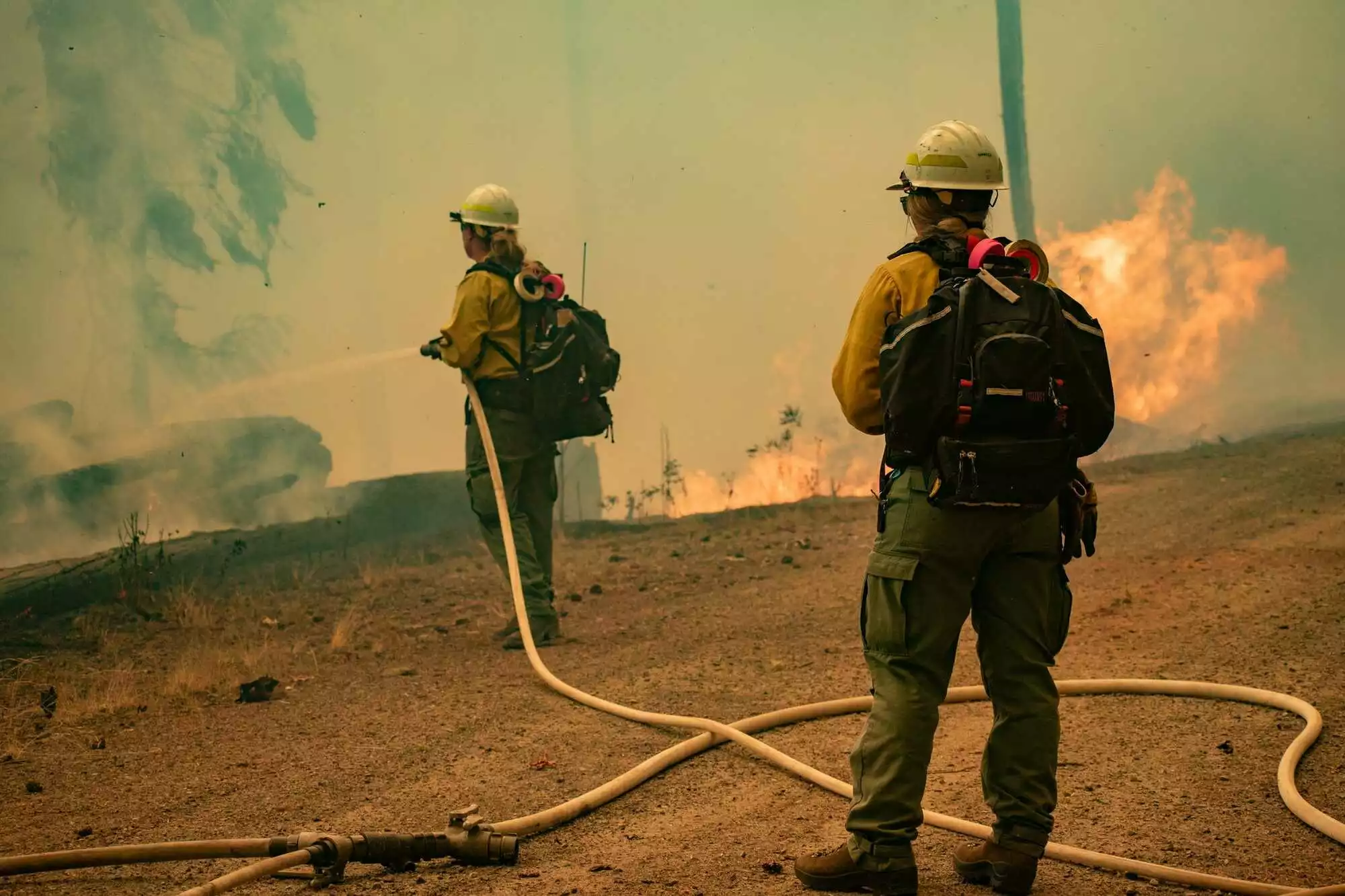
Polymarket is offering contracts in prediction markets related to the ongoing wildfires in Ontario, Canada, and Minnesota.
As of Friday afternoon, one of America’s two leading prediction operators has several markets tied to the air quality in Midwest and Northeast cities. These markets prompt users to predict when the Air Quality Index will fall below 100, which is still double the “healthy” range of 0-50.
Wildfires engulf Canada and the USA
Hundreds of wildfires are burning in Canada and Minnesota, creating hazy skies and lowering air quality for Americans in the top right quadrant of the country. Reuters reported on Thursday that roughly 5.9 million acres had been burned during wildfire season in Canada, according to government data.
There is no single cause of the wildfires. Dry conditions and lightning strikes created initial outbursts of flames, which grew in strength the longer they burned.
Wildfire smoke has spread across the midwest and northeastern regions of the U.S. Air quality has been seriously impacted from Bismarck, North Dakota, down to Norfolk, Virginia.
“The exposure to the fine particulate matter, the air pollution, is similar to smoking a quarter to half a pack a day,” said May-Lin Wilgus, a pulmonologist and professor at UCLA.
Prediction markets related to wildfires
As the devastation piles up, Polymarket is allowing its customers to predict the Air Quality Index in New York City, New York, Chicago, Illinois, and Columbus, Ohio.
According to market data at the time of writing, there’s a 17% chance the Air Quality Index will drop below 100 in New York City on July 18. Likelihoods for the following days are 63% on July 19, 86% on July 20, and 87% on July 21.
Chicago has a 54% chance of crossing the threshold by July 18, a 74% chance by July 19, an 84% chance by July 20, and a 91% chance by July 21.
Columbus has a 55% probability of getting under 100 by July 18, an 85% chance by July 19, a 90% chance by July 20, and a 95% chance by July 21.
Polymarket’s website shows that about $1,100 was traded in the New York City market. The Chicago and Columbus prediction markets have not generated any trades.
Kalshi, America’s leading prediction market operator, has a dedicated “Natural Disasters” trading tab on its website—none related to the ongoing wildfires. Options include major volcanic eruptions, the number of tornadoes, and the severity of an earthquake.
New rules wouldn’t ban wildfire markets
The Commodity Futures Trading Commission (CFTC) proposed a new series of rules in June. Among several ideas, the body suggested amending the existing framework to ban prediction markets involving terrorism, assassinations, and violence.
Despite that, it did not propose removing “natural disasters” and markets related to events such as the ongoing wildfires.
The CFTC has become extremely active in proposing rules for its operators. It has suggested eight items since the start of June, meaning that it is working at about twice its previous rate during the rest of President Donald Trump’s second term.
The Trade Handle Prediction Markets Take
While prediction markets insist that they are a financial tool, there are prediction markets that seemingly do not serve the public interest. The CFTC is working to prohibit “man-made” disasters, but its recent proposals did not address natural disasters. Polymarket’s combined $1,100 trading volume shows its customers’ lack of interest in these markets.