

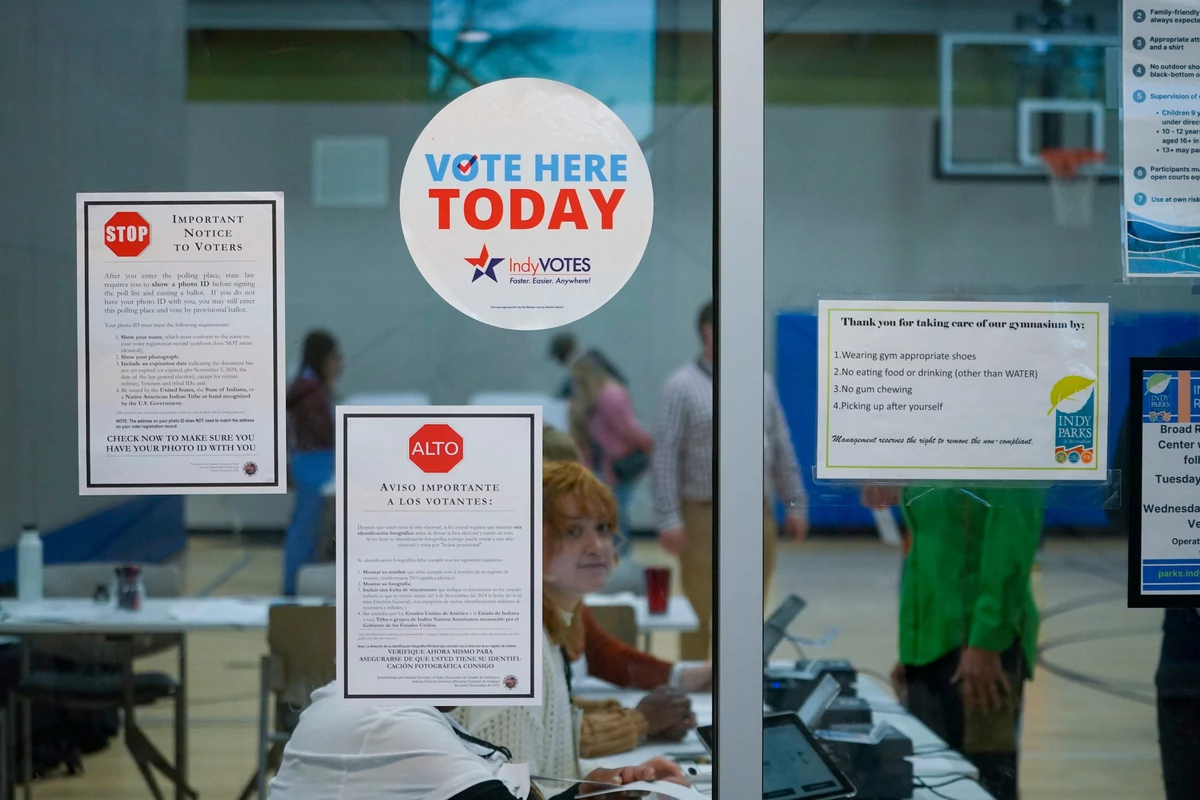
Prediction markets had a pretty good election night. Kalshi and Polymarket both had Democrats favored to take control of the House and Senate, and that's exactly what happened. For an industry that has spent the last couple of years trying to convince people its prices are worth paying attention to, November 3 was another opportunity to make its case.
But before we start handing out trophies for predicting the midterms, there's a question worth asking. How impressive is it to predict something with a 94% chance of happening? That's roughly where the markets had Democratic control of the House heading into Election Day.
The Senate was a different story, with Democrats priced around 75%, but traders still had a clear favorite. Getting those outcomes right matters. It just doesn't tell us nearly as much about the quality of these markets as some people would like to believe.
Picking the Winner is the Easy Part
Consider a football game where one team is heavily favored. If you correctly predict that team will win, congratulations. But nobody will call you a forecasting genius for choosing the team everyone expected to win.
Election markets deserve the same perspective. According to a November 4 analysis from RotoWire, the candidates favored by Kalshi traders won 479 of 487 resolved races across several categories. That's approximately 98%, an impressive figure at first glance.
The problem is that most elections aren't particularly competitive. When a candidate has a 95% or 99% market-implied probability of winning, getting that race right doesn't tell us much about how well traders understood the election. The outcome was already considered extremely likely.
We should be far more interested in how these platforms performed in races where the outcome was genuinely uncertain. Did they identify the right favorite in close contests? Did their prices reflect the actual uncertainty? Were traders picking up on information that traditional polling missed? Those are much tougher questions, and they're the ones worth answering.
The Markets Missed Some Important Races
The Democratic sweep of Congress wasn't the entire election story. Several individual contests produced results that prediction market traders hadn't anticipated. Democrats won Senate races in Texas and Ohio, while South Carolina's Annie Andrews defeated Republican Darline Graham. Gina Hinojosa also defeated Texas Governor Greg Abbott.
Those results remind us that getting the overall direction of an election right doesn't mean every market was priced accurately. To be fair, nobody should expect prediction markets to correctly identify every winner. A candidate with a 20% chance is still supposed to win occasionally. That's how probabilities work.
But there's a difference between accepting that unexpected results happen and refusing to examine why traders underestimated certain candidates. If an exchange consistently prices a particular type of race poorly, that's useful information. If prices improve as Election Day approaches, that's worth studying too. We can't learn much from these markets if every correct prediction becomes proof of their brilliance and every incorrect one gets brushed aside as an unavoidable surprise.
A 75% Probability isn't a Promise
One of the biggest misunderstandings surrounding prediction markets is the tendency to treat a high contract price as a guarantee. A market trading at 75 cents suggests roughly a 75% implied probability. It doesn't mean the outcome is certain, and it doesn't mean the people trading that contract possess information nobody else has.
In fact, if events priced at 75% happen about three out of every four times across a large sample, the market is doing a reasonable job of estimating probabilities. That concept is called calibration. It's a better way to evaluate forecasting performance than simply counting how many favorites won.
We should also look at how markets performed at different points in the election cycle. A contract that moves to 99 cents after the outcome becomes obvious shouldn't receive the same credit as a well-priced forecast made weeks earlier. The timing matters, especially when these probabilities are increasingly being shown alongside traditional election coverage.
Prediction Markets Still Have Something Valuable to Offer
None of this means we should dismiss what happened Tuesday. Kalshi and Polymarket gave people a constantly changing picture of how traders viewed the election. Prices responded to new information, and anyone following the markets could watch those expectations change throughout the night.
That's useful, particularly when compared with polls that might have been conducted several days earlier. Prediction markets also combine the opinions of participants who are willing to put money behind their expectations. That doesn't automatically make those opinions correct, but it creates a different kind of information source.
The Trade Handle Prediction Markets Take
We think prediction markets earned some credit for the 2026 midterms. They anticipated Democratic control of both chambers, and the overwhelming majority of favored candidates won their races. That's a good result, and there's no reason to pretend otherwise.
But we'd like to see the industry become more interested in explaining its misses than celebrating its wins. Give us comparisons with polling averages. Show us how contracts priced at 60%, 70%, and 80% actually performed. Break down the competitive races separately from the contests where the winner was barely in doubt.
Most importantly, evaluate prices before the results started coming in. Prediction markets have spent years arguing that their probabilities can provide information traditional forecasts sometimes miss. That's a claim worth testing seriously, especially now that these numbers are reaching audiences far beyond the people actually trading contracts.