


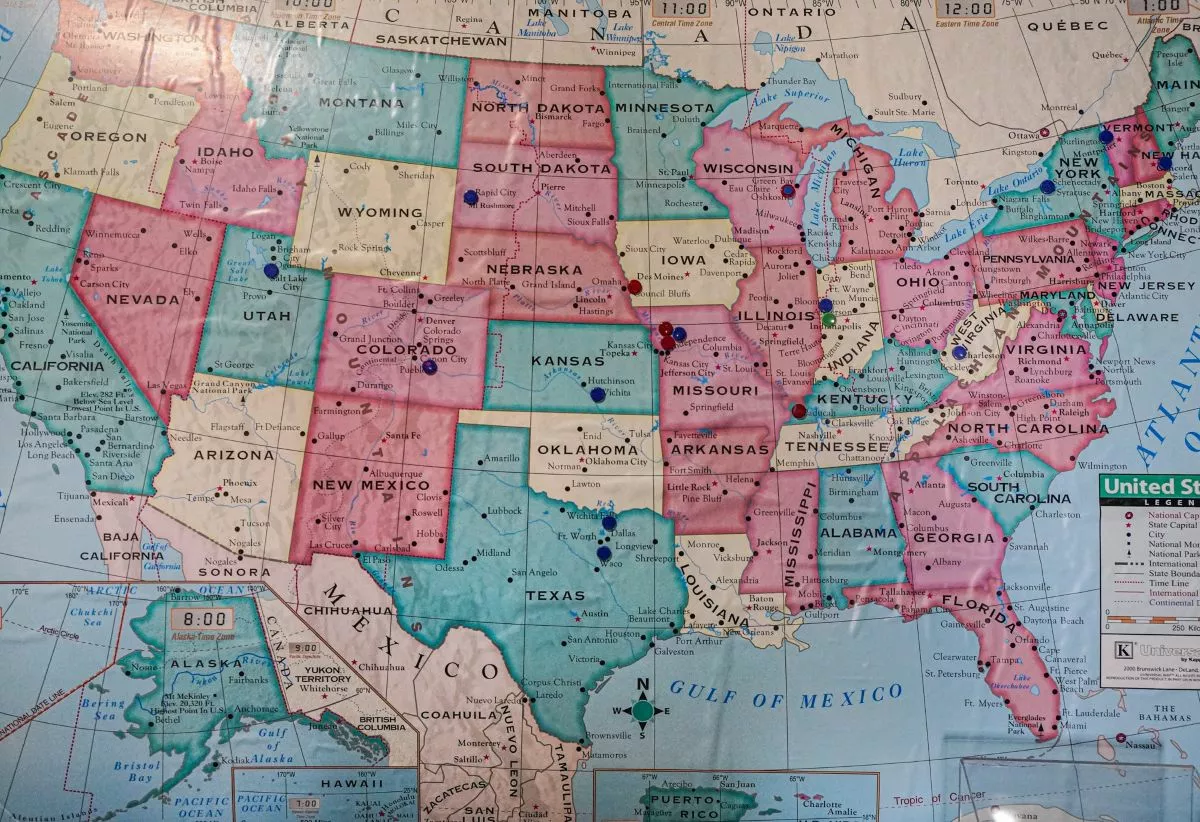
Prediction markets have spent much of 2026 arguing that they belong under one federal regulatory system. States increasingly disagree, and that disagreement is becoming one of the industry's biggest problems.
We have watched the same basic fight spread across the country. Platforms point to Commodity Futures Trading Commission oversight, while state officials argue that certain event contracts, particularly sports products, still fall within their authority.
The CFTC itself has gone to court against multiple states to defend what it describes as its exclusive jurisdiction. For prediction markets, winning individual cases matters. The bigger problem is that the industry is becoming less national every time another state enters the fight.
A National Product is Becoming a State-by-State Fight
Prediction markets make the most sense as national products. One exchange, one pool of liquidity, and one regulatory framework is considerably cleaner than creating different versions of the same marketplace depending on where you happen to live.
That simplicity is getting harder to maintain. Legal proceedings involving prediction-market platforms have spread across numerous states, with governments, exchanges, and even the CFTC filing cases over where federal authority ends and state authority begins.
New York's recent lawsuit against Polymarket is just the latest example. Connecticut recently issued cease-and-desist orders to nine companies, while Michigan secured a preliminary injunction requiring Kalshi to continue blocking sports event contracts for residents there.
Winning One Case Doesn't Fix the Problem
The industry has won some important decisions. It has lost others.
That might be the most uncomfortable part of the situation. A favorable ruling in one jurisdiction doesn't necessarily predict what will happen elsewhere.
The legal landscape now includes disputes involving:
- Whether sports event contracts qualify for federal treatment under the Commodity Exchange Act
- Whether CFTC oversight preempts state laws
- Whether states can require prediction-market operators to obtain their own licenses
- Which consumer protections and age requirements apply
- Whether states can block particular contracts within their borders
The appellate courts haven't produced one uniform answer either. The Third Circuit previously sided with Kalshi in its New Jersey dispute, while the Ninth Circuit took a different approach in a Nevada case. On Sept. 25, the Sixth Circuit also ruled that Kalshi had not adequately shown its sports event contracts qualify as swaps under the Commodity Exchange Act in litigation involving Ohio and Tennessee.
Geofencing Could Become a Bigger Deal Than it Sounds
Geofencing sounds like a technical compliance issue. For prediction markets, it could become a product problem. Imagine opening the same app in Georgia, driving across a state line, and suddenly discovering that certain markets aren't available. Multiply that across enough states, and a truly national prediction-market exchange starts getting messy.
Liquidity makes this even more important. Prediction markets work better when buyers and sellers gather in the same marketplace. Fragmenting access doesn't necessarily destroy that model, but it certainly doesn't make building deep national markets any easier.
States Have Little Reason to Simply Walk Away
It's also becoming difficult to imagine states voluntarily abandoning these fights. States have their own regulatory structures, consumer-protection rules, and established authority over traditional sports gaming within their borders. Prediction markets arrived with a completely different argument: these are federally regulated financial contracts, meaning the normal state framework doesn't control them.
Those positions don't leave much room for an easy compromise. The CFTC has reinforced the federal side by suing states including Arizona, Connecticut, Illinois, New York, New Mexico, and Kentucky, among others, to protect what the agency says is federal jurisdiction. This isn't just prediction-market companies fighting regulators anymore. In some cases, one level of government is effectively fighting another over who gets to regulate the product.
Getting Bigger Doesn't Make the State Problem Disappear
There has been a tempting assumption around prediction markets that growth eventually solves the regulatory question. If enough people trade, enough major companies enter and enough money flows through the industry, perhaps prediction markets simply become too established to seriously restrict.
I'm increasingly skeptical of that idea. Growth can give the industry more resources and political relevance, but it also gives states more reason to pay attention. The CFTC said earlier this year that CFTC-registered exchanges were facing nearly 50 active cases involving a range of legal challenges. Prediction markets getting bigger hasn't made the jurisdictional question disappear. It has made the fight over that question considerably bigger.
The Trade Handle Prediction Markets Take
We still think the federal-versus-state question may ultimately become one of the defining issues for prediction markets in the United States. The industry can continue launching products, signing partnerships and attracting new traders while these cases work through the courts, but it can't treat the state battles as background noise. The real danger isn't necessarily one state defeating one platform. It's fragmentation.
Prediction markets were built around the idea that a national exchange could bring traders together around the same contracts. If the industry eventually becomes a patchwork where your available markets depend heavily on which side of a state line you're standing on, prediction markets may still grow considerably. They just won't look quite like the national market the industry originally set out to build.