


Prediction markets are expected to reach $187 billion in taker volume before the end of the year, according to a new report.
Investment banking company Macquarie Group settled on its prediction in a new report, which updated the previous $190 billion projection released last month. The new value is still significantly ahead of the prior $169 billion forecast and is approximately 8.5x larger than the $22 billion total in 2025.
Prediction markets drive huge volume
“Takers” are retail traders who buy contracts offered by “makers,” or the operators. One user who purchases 20 shares of contracts sold for $0.25 each accounts for $5 in taker volume.
Prediction markets have experienced extraordinary growth since they settled before mainstream audiences last year. Although the platforms maintain that they do not offer sports betting products, roughly 80% of their trading volumes are based in sports. Platforms such as Novig and ProphetX also offer sports-only markets.
Unsurprisingly, the availability of high-demand sports contracts in the NFL, college football, and MLB Playoffs has resulted in another spike in activity at prediction markets. According to analytics platform DeFi Rate, all venues generated a $96.8 billion notional trading volume over the last 30 days, including $24.8 billion in paid dollars. Kalshi generated $4.2 billion in trades on Sunday, Oct. 11 alone.
Kalshi’s prediction market dominance has become customary — DeFi Rate reported that the company represented 76% of the entire market share over the 30-day period that ended on Oct. 13, while growing its volume 60% over the previous 30-day period.
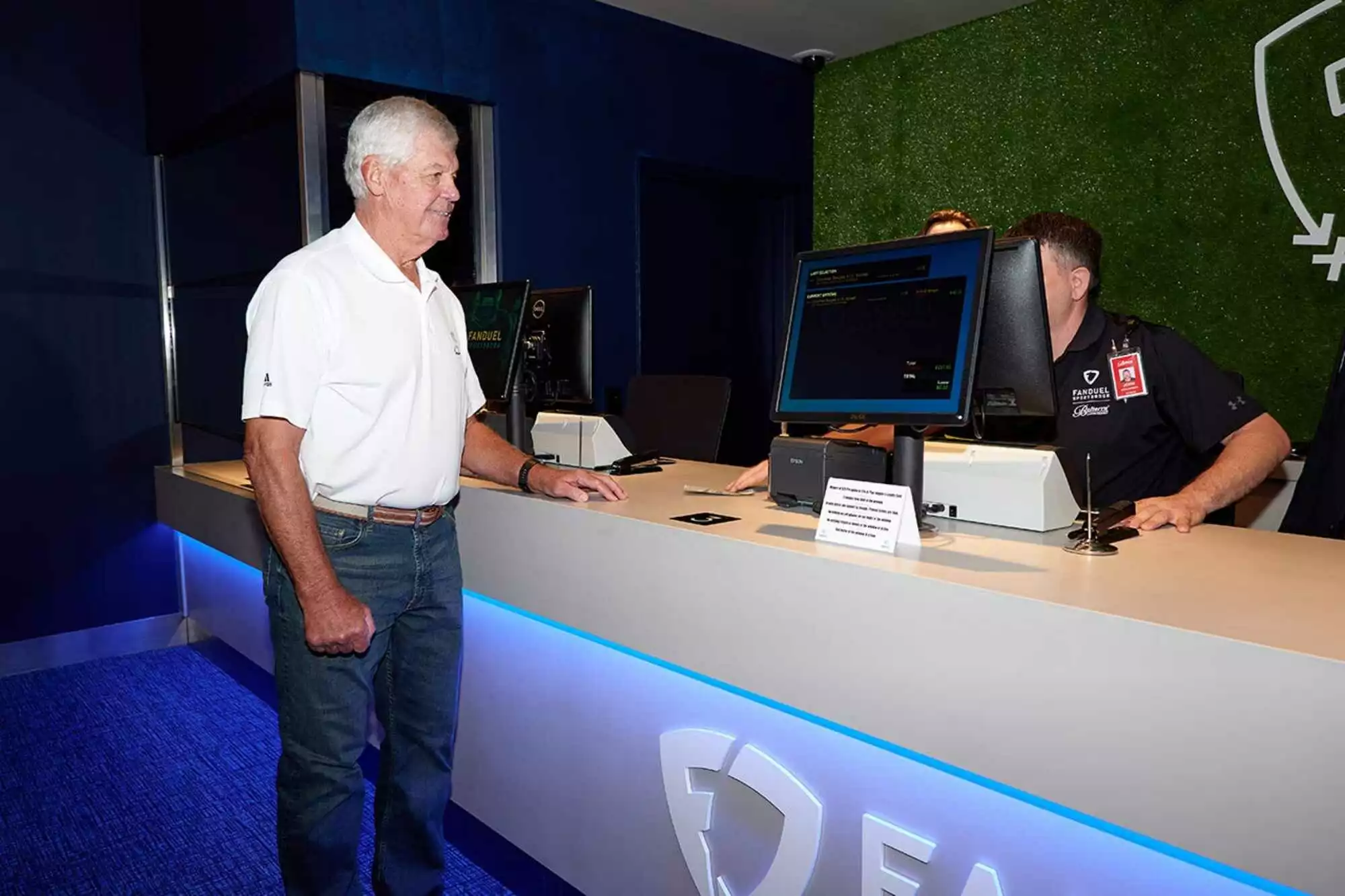
Despite that, Macquarie noted that DraftKings’ DKeX and FanDuel’s FanDuel Predicts are steadily growing in the industry.
FanDuel and DraftKings growing
The two companies, known primarily for their sports betting dominance, made recent strides in prediction markets.
Macquarie’s Chad Beynon noted that both DKeX and FanDuel represented 4% and 3% of the September prediction market industry, respectively. That’s despite only offering prediction markets in states where they do not provide sports betting services, mostly because sports wagering is not legal in those jurisdictions.
“Importantly, this share is across the entire market, while DKNG/FLUT are 2x stated share in markets without legal [online sports betting],” wrote Beynon.
Fittingly, mobile app downloads for both platforms spiked in recent weeks. Week 4 of the NFL season saw 11% and 7% shares for the pair, respectively, in downloads for all prediction market apps.
“DraftKings and FanDuel download positions suggest they remain under-monetized participants in the category and could gain share as geographic availability expands and product awareness improves,” Beynon added.
Although sports event markets have been in heavy demand since they were launched early last year, attention may be drawn elsewhere in the coming weeks.
The November midterm elections offer prediction markets the chance to return to their roots with political contracts, which were instrumental in driving their early trading handles. Although the presidency won’t become the primary talking point for another couple of years, there are a slew of races that feature contracts which are already being traded.
“While sports should remain the largest contributor to volume growth through year-end, the 2026 U.S. midterm election cycle is likely to drive a meaningful increase in political-event trading activity,” Beynon said. “More broadly, total industry prediction market volume reached $20.1 billion in September, up 1,079% year-over-year, reflecting continued gains in liquidity, market breadth, and consumer awareness across the category.”
The Trade Handle Prediction Markets Take
Popular sportsbook companies have a strong infrastructure and reputation for crossover users who navigate between sports betting odds and event contracts offered by prediction markets. Their increasing market shares, despite their limited geographical presence, represent noticeable audience acquisition during what is already an extremely active time for traders. Both platforms have also professed their commitment to growing in prediction markets, suggesting more investment could be on the horizon.