


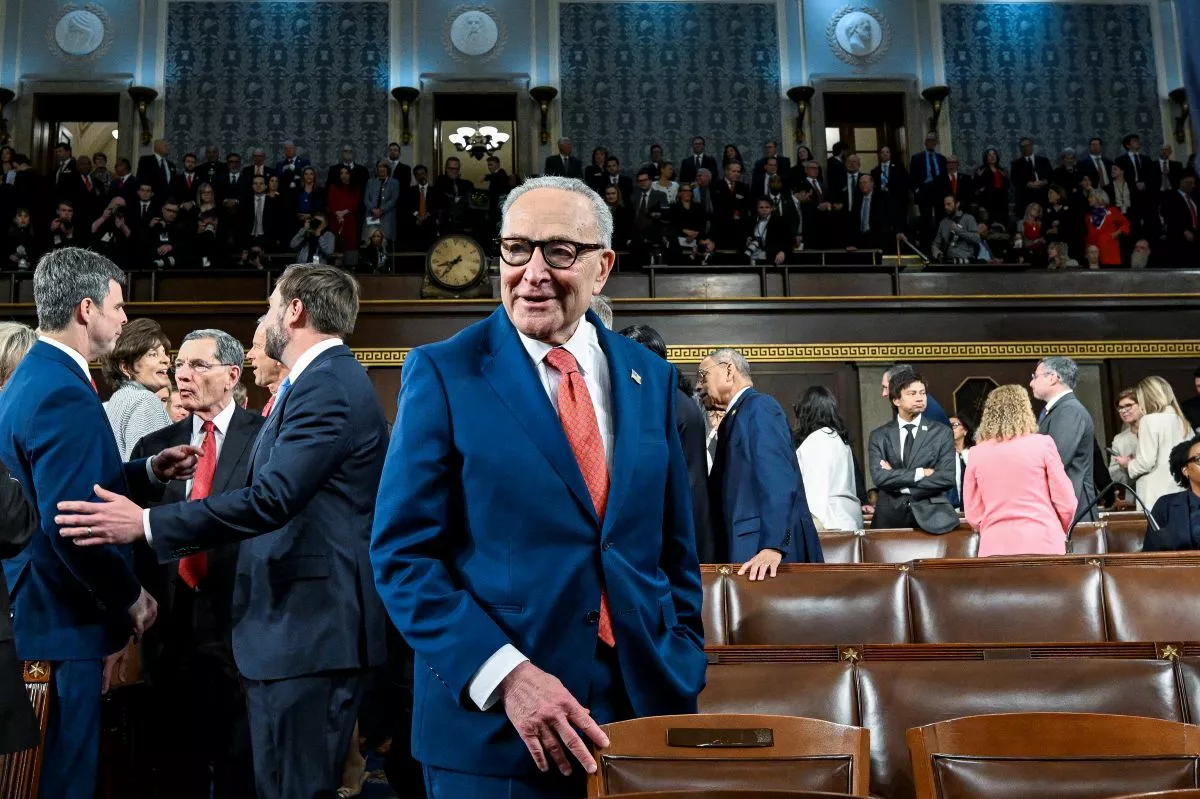
Prediction markets are back in the spotlight, and this time the pressure is coming straight from Washington. Senate Majority Leader Chuck Schumer is pushing for a full ban on government officials' use of these platforms, going beyond the Senate's recent internal rule change. If you have been following the space, you can feel the tone shifting pretty quickly.
From where we sit, this is not just another headline. It is a sign that the conversation is moving past "what are prediction markets" and into "who should be allowed to use them."
The Senate Already Made a Move
The Senate did not waste much time acting. Lawmakers passed a rule that blocks senators and their staff from participating in prediction markets, and it went through without much resistance. That alone tells you there is broad agreement on this issue.
Schumer now wants to take it further. He is calling on the House and the White House to follow suit, thereby extending the restriction across the federal government. The thinking behind it is pretty simple. People working in these roles often have access to information the public does not, and in some cases, they can directly influence outcomes.
Real Cases are Driving This Push
This is not happening in a vacuum. A series of recent incidents has made it hard for lawmakers to ignore the issue. One of the biggest involved a U.S. Army Special Forces soldier accused of using classified information to make more than $400,000 tied to a military operation involving Venezuela. There were also reports of accounts that appeared to anticipate a U.S. military strike on Iran before it became public, generating significant profits in the process.
Situations like that tend to speed things up. Once national security and financial gain intersect, policymakers will act. Platforms themselves have also stepped in. Kalshi recently fined and banned several political candidates for participating in markets tied to their own elections. That shows that guardrails are already being put in place, though lawmakers clearly want something more consistent across the board.
The Focus is Starting to Shift
What stands out here is how the conversation is evolving. Not long ago, most of the debate centered on whether prediction markets should exist and how they should be regulated. Now, the spotlight is also on who gets to participate.
Schumer's proposal would remove government officials from these platforms entirely. That is a big shift. It also opens the door to more questions. If federal employees are restricted, it is not hard to imagine similar rules being discussed at the state level or even in certain private sector roles.
National Security Changes the Conversation
Framing this as a national security issue changes everything. Once that label gets attached, there is a lot less room for gray areas. The idea that someone could use inside knowledge of military actions or policy decisions to profit is something lawmakers are unwilling to accept.
At the same time, prediction markets are built around information and timing. That makes it tricky to draw a clean line between smart positioning and unfair advantage. It is not an easy problem to solve, though it is clear that regulators are trying to define that boundary more clearly.
The Trade Handle Prediction Markets Take
This feels like a necessary step, even if it adds more complexity to the space. Keeping people with access to nonpublic information out of these markets makes sense. It helps protect trust, which is critical if prediction markets are going to keep growing.
At the same time, this is another signal that regulation is catching up. The space is evolving quickly, though the rules governing it are tightening. The big takeaway is simple. As prediction markets become more mainstream, expectations for fairness and transparency will only grow.