


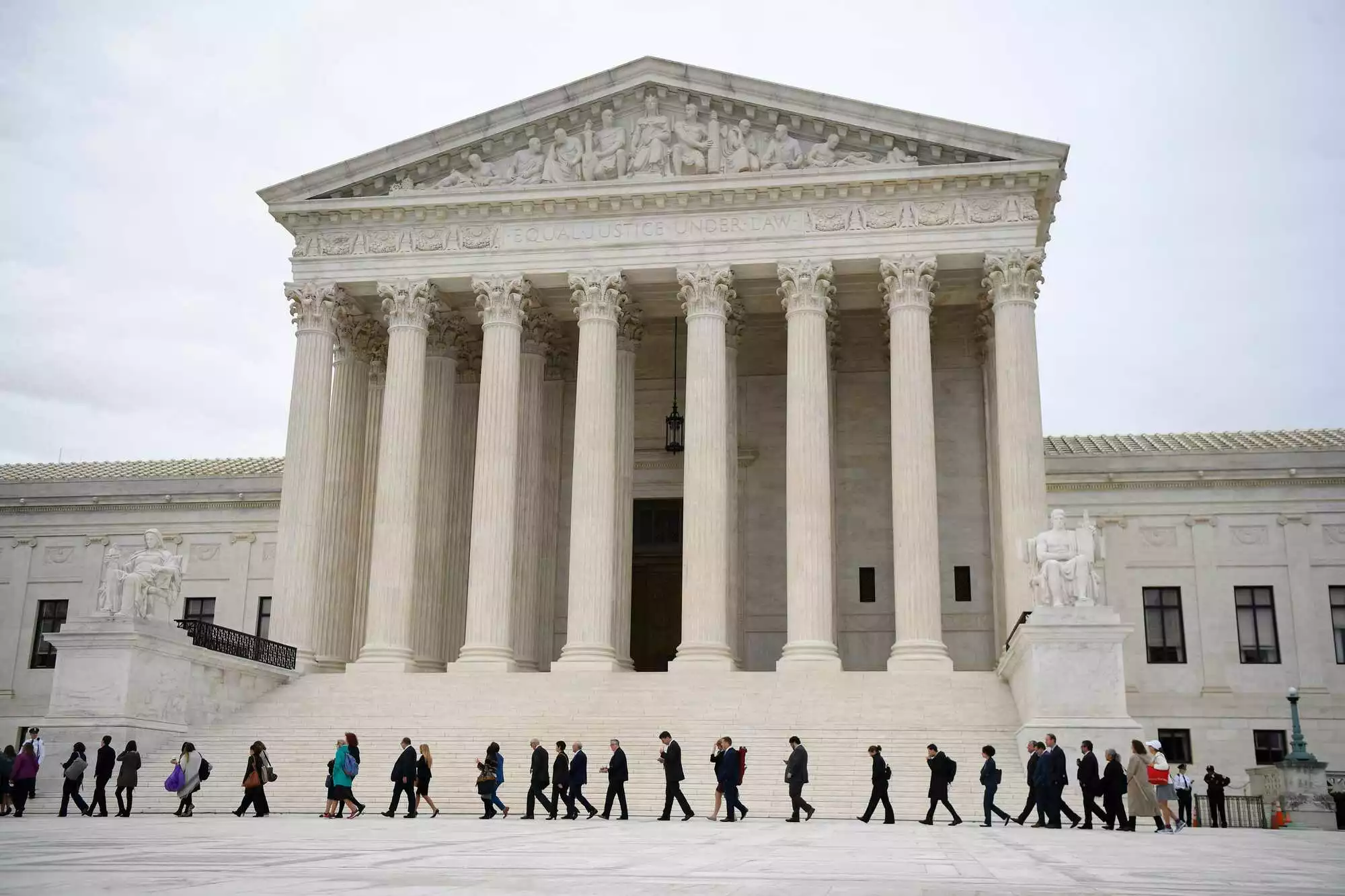
The U.S. Supreme Court is not taking up any prediction market cases in the near future.
The highest court in the country published its first cases set for review in the 2026-27 term, notably omitting any related to regulation of event contracts. However, a couple of upcoming deadlines will force the controversial topic to be revisited in the near future.
Waiting on reviews
The Supreme Court’s Oct. 1 Order List granted certiorari, or a review of lower court’s decisions, to three cases: Missionaries of St. John v. Frederic, Marschner v. Marschner and Rhoney v. Barbosa da Cunha. None of those are related to prediction markets or gambling.
The crux of the prediction market controversy relates to regulatory authority. Platforms insist that they fall under the watchful eye of the Commodity Futures Trading Commission (CFTC), while state gaming officials believe that their sports event contracts should result in them being treated as sportsbooks.
Two petitions have asked the Supreme Court to end the division by providing a final, resounding answer: are prediction markets federally regulated financial assets, or are they sports betting in disguise?
Agreement has been hard to come by, as the federal appeals court already reached two different verdicts.
The Third Circuit sided against New Jersey and state authority, ruling that the CFTC had the exclusive right to regulate sports event contracts, thereby banning local officials from enforcing gaming regulations against platforms such as Kalshi, Polymarket, Underdog, and others.
The Ninth Circuit produced a different outcome. Judges unanimously ruled that Nevada could apply its gaming regulations and ban unlicensed sports event contracts.
New Jersey filed a petition for the Supreme Court to review the prediction markets case, known as Flaherty v. KalshiEX, on Sept. 2. Kalshi’s response was originally due on Oct. 8, but that was extended to Nov. 9. A pair of amicus briefs have already been submitted.
Robinhood submitted a petition on Sept. 10 that asked the court to review Robinhood Derivatives v. Dreitzer and the ruling to support Nevada gaming regulators’ enforcement rights. The state’s response is due on Oct. 14.
Supreme court to review prediction markets?
The Supreme Court is unlikely to consider petitions until it has received responses from the opposing party. Although those were not submitted in time ahead of the Court’s release of its first reviews, they will soon be provided for a decision.
That said, delays could be on the horizon. Kalshi has an outstanding request for en banc rehearment — in which an entire appellate court instead of a standard three-judge panel — reconsiders a case — in Nevada. The Nevada Gaming Control Board told the appeals court in an Oct. 1 letter that this was “just another attempt at delay” while the CFTC considers amendments to its event contract ruleset.
Although only two states filed petitions for a Supreme Court review, many have been engaged in battles with prediction markets. The Sixth Circuit ruled against Kalshi in Ohio at the end of September, allowing the state to begin enforcement procedures against the operator.
Conflicting rulings were reached in Michigan and Illinois as recently as last Friday. Michigan’s attorney general was granted an injunction that would invoke a $500,000 per-day fine for operators who offered event contracts, while an Illinois judge ruled that federal law likely preempts the state from applying gaming regulations to prediction operators.
The Trade Handle Prediction Markets Take
A Supreme Court review of prediction markets has been a long time coming. The outstanding petitions must wait until responses are filed, but the clock appears to be ticking on the widespread disagreement and state-by-state differences in regulation. The CFTC has been actively changing and reviewing its rules for operators, and it will be interesting to monitor how that evolves as the Supreme Court’s deadlines for responses approach.